341
Don't believe them
(no.lastname.nz)
Post memes here.
A meme is an idea, behavior, or style that spreads by means of imitation from person to person within a culture and often carries symbolic meaning representing a particular phenomenon or theme.
An Internet meme or meme, is a cultural item that is spread via the Internet, often through social media platforms. The name is by the concept of memes proposed by Richard Dawkins in 1972. Internet memes can take various forms, such as images, videos, GIFs, and various other viral sensations.
Laittakaa meemejä tänne.

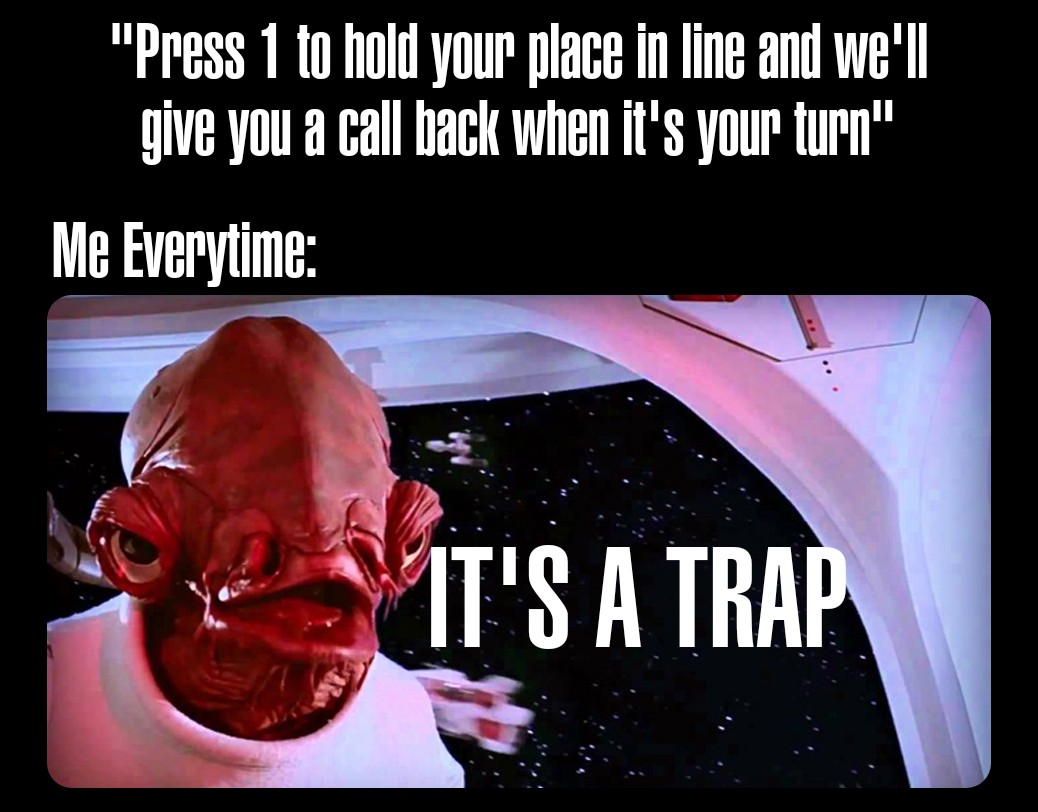
I’ve worked in two different inbound government call centre-type environments and can confirm that callbacks are always queued as per their place in the queue. This is using Genesys, which is a very commonly used virtual contact centre software, and using different iterations of the software at both jobs.
If you don’t get a call back at all that could be due to call screening/blocking (most call centres call out from a ‘no caller ID’ number) and if you have to wait longer than the expected time, that’s likely due to the existing calls taking far longer than the average or median call length or a number of people needing to be off-phones for a period (due to breaks, emergency, a planned/unplanned meeting, or to catch up on overdue admin tasks).
Many times my inbound work has been a callback and the person who requested the callback either doesn’t pick up or it goes straight to voicemail. Depending on the service, the worker may be trained not to leave a message, as is the case for many banking/financial institutions or crisis support services such as domestic violence or child protection hotlines, as voicemails can cause a security or personal safety threat.