940
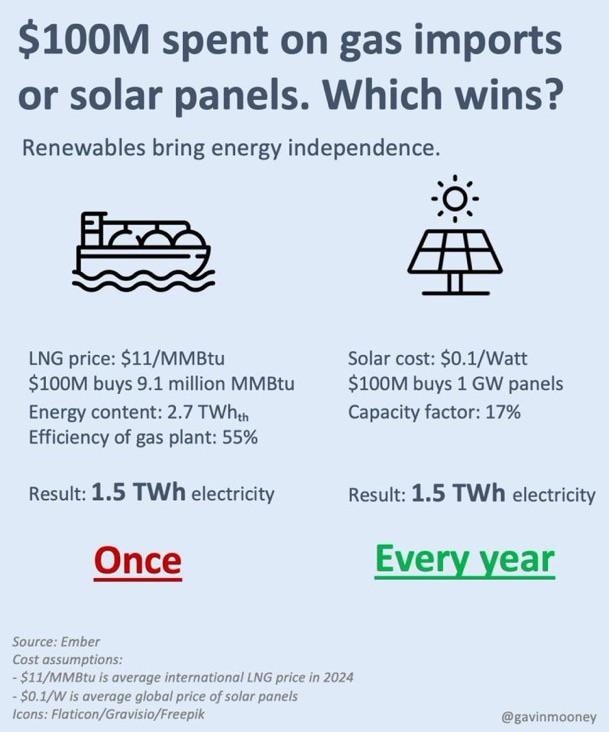
Gas imports or solar panels?
(slrpnk.net)
Discussion of climate, how it is changing, activism around that, the politics, and the energy systems change we need in order to stabilize things.
As a starting point, the burning of fossil fuels, and to a lesser extent deforestation and release of methane are responsible for the warming in recent decades:
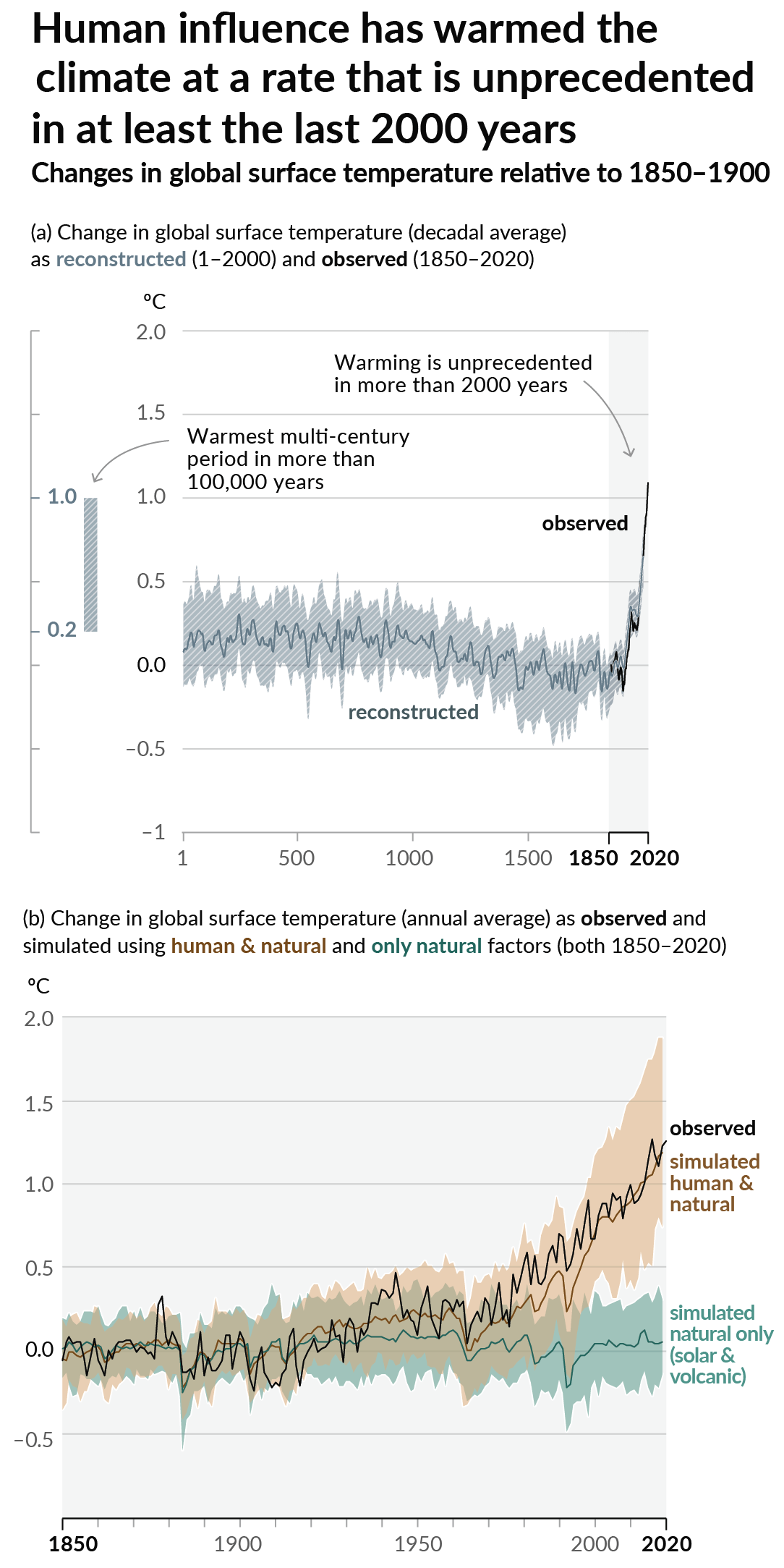
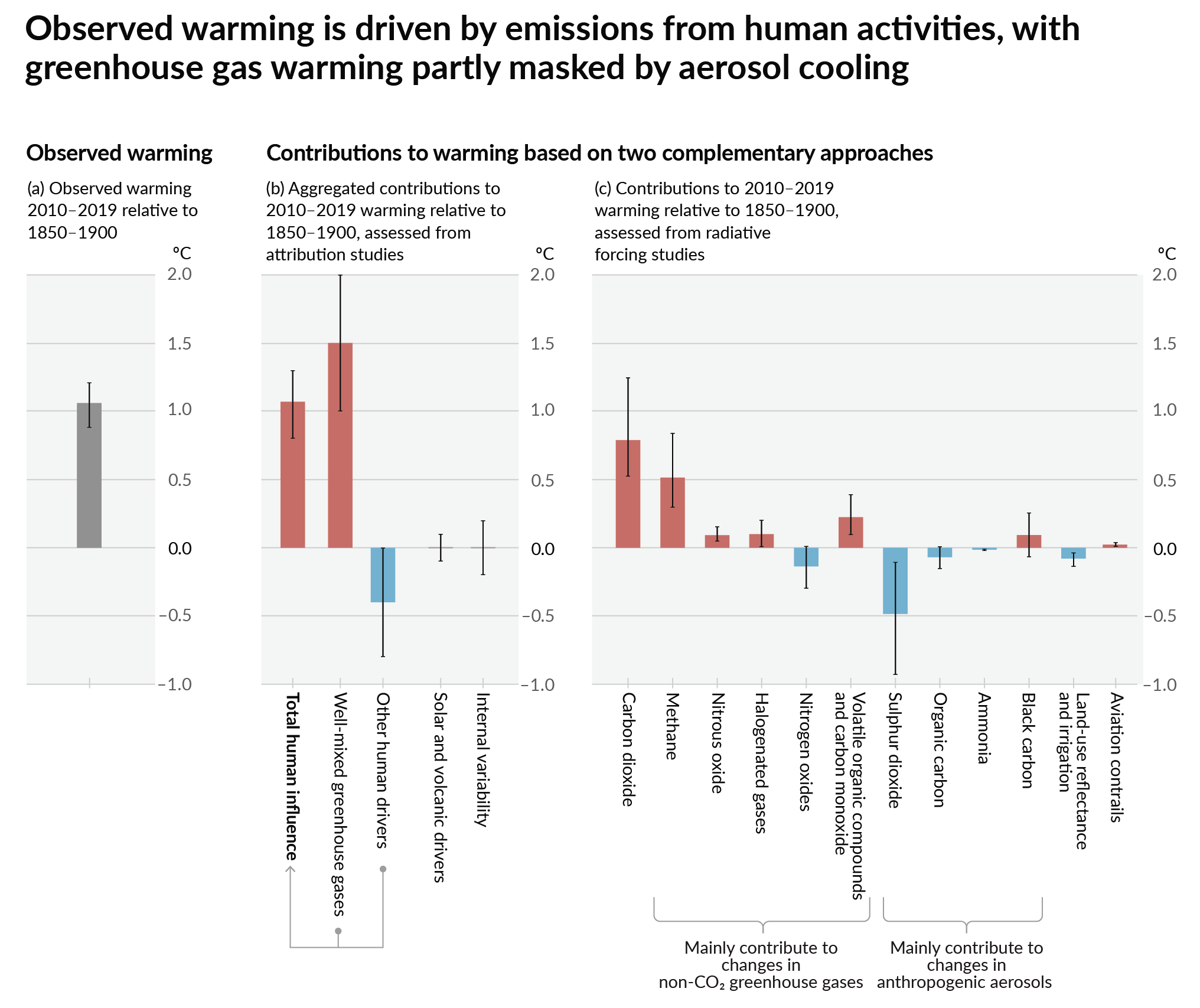
How much each change to the atmosphere has warmed the world:
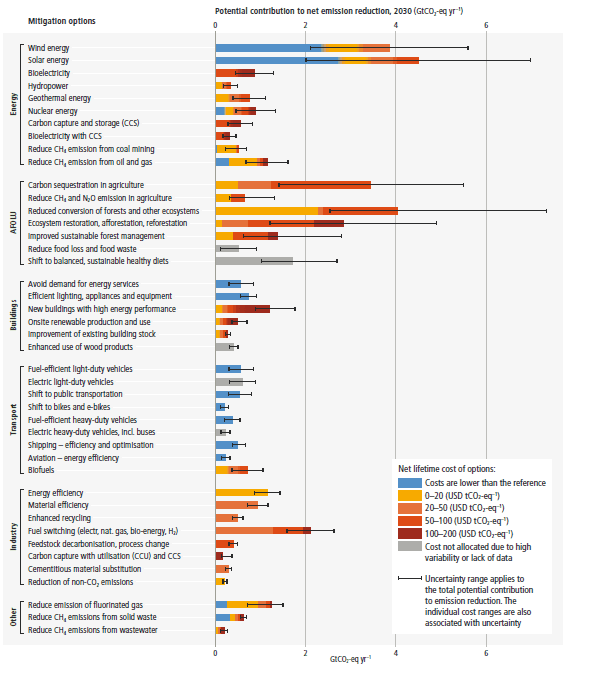
Recommended actions to cut greenhouse gas emissions in the near future:
Anti-science, inactivism, and unsupported conspiracy theories are not ok here.
I had Google help me out with this one. For illustrative purposes, let's take the Tesla Semi (an electric commercial truck) battery. You could transport about 4 MWh worth of electricity. That's about 4 months worth of electricity for an average American household. Here's the details:
A single Tesla Semi utilizes an estimated 850 kWh to 1,000 kWh battery pack, which weighs approximately 10,000 to 12,000 lbs. If a trailer were filled strictly with these large, fully integrated packs rather than smaller, individual battery cells, only about 4 to 6 of these high-capacity, 1-megawatt-hour systems could physically fit within the weight limits of a standard trailer.
Battery Capacity & Weight: The Semi uses roughly 1 MWh, which consists of four, high-capacity, smaller packs.
Total Weight: A full 1 MWh pack weighs between 10,000 lbs (4,570 kg) and 12,000 lbs.
Capacity Limit: Due to weight restrictions of 80,000 lbs for a loaded semi (with a 2,000 lb increase for EVs), you cannot simply load 80,000 lbs of batteries into a trailer.
Physical Space: While the trailer has massive volume, the 10,000+ lb per pack weight means the trailer would reach its weight limit long before it is full of, say, Model S packs (if that was the method).
Now compare that to high voltage power lines if you're interested. "HVDC transmission losses are quoted at 3.5% per 1,000 km (620 mi)" (Wikipedia)