From https://existentialcomics.com/comic/651
Mazdak was an ancient Iranian Philosopher, who believed the scriptures (Zoroastrianism scriptures, this was pre-Islam) dictated radical social equality. He thought all property should belong to everyone, and wealth shared equally. He was so convincing that he even convinced the king to go along with it, and was able to successfully implement many of his social reforms. He also believed in getting rid of clerics, because they held religious authority over the population, which he thought was illegitimate. Since they were the judges, he of course "lost", and was executed, along with thousands of his followers. As with most ages and societies, those with huge amounts of power and property have never been too keen on philosophers that want to take it away.
Eventually other rich and powerful Zoroastrian and Christian kings got wind of it, and challenged Mazdak to "debate" their clerics. These other kings were the judges, so naturally their guys won, and they brutally executed Mazdak and thousands of his followers. If Mazdak was a prototype for socialism, or even communism, I suppose you could say their reaction to it was a prototype for how to defeated socialism in the good old "marketplace of ideas".
(b.t.w., it may be out-of-topic, but it's everyday)

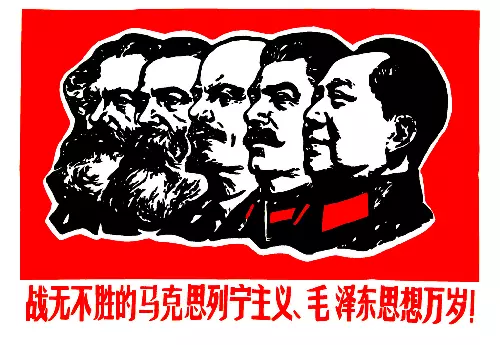
I'm in favor of (the ideological/conceptual wealth brought by )diversity, and hence for a confederation of city-states, but large states wouldn't be a problem, as California or Switzerland showed.
Doing referendums for 100.000 people isn't more difficult than doing it for 10 millions.
That's a problem, because experts are chosen by the power in place, who determines what orthodoxy should be if not the citizens ?
The solution is often a moral choice, while its implementation is often a technical one(, so we could leave the implementation to them).
And of course citizens will make mistakes, just like our "leaders" make mistakes, and experts(, e.g. economists,) disagree with each other.
We should take measurements before//after the law to evaluate if it changed things as the experts promised the citizens it would(, ideally with small scale tests prior to the referendum), and if it doesn't then i.m.o. that law should be automatically cancelled(, or a new referendum and debate should take place).
So, instead of experts deciding for us, what we should want is experts from both sides of the debate/referendum(, with an equal airtime of course), and citizens watching/reading their debates(, i'd prefer written exchanges to an improvised time-limited verbal sparring), who'd then vote based on these debates by researchers/engineers/experts.
It's much safer against abuses of power.
Yes, citizens have other things to do than voting every weekend and knowing everything, but we don't need to produce as many laws as nowadays(, we have so much more of them than, e.g., in the 50s, is that really necessary ?), so we could only vote for important stuff, which only happens a few times a year.
And if we imitate Athens, then only citizens can enact new laws, it's citizen-initiated and there are no leaders(, the preparation of the laws being made by a small assembly selected by lot, free from interferences and evaluated afterwards).
👍, it's obviously not a coincidence if most citizens from capitalist-owned countries are unable to explain how democracy in socialist states worked/works.
Well, it's a gradient as i succinctly developed here, and we'll perhaps indeed never get rid of the hierarchy between the enterprise and the society it is supposed to serve.
China has plenty of diversity across provinces, so I don't really see how a large state is at odds with local diversity. In fact, a lot of decision making in China is done in form of direct democracy at the local level. Which, again, is the scale where this makes sense to do. People can meaningfully participate in decisions that affect them personally and that they have a good understanding of. Doing a referendum across 10 millions people makes a lot less sense because those people likely don't have a lot of overlapping concerns in most cases.
This isn't a theoretical issue. You can look at how this works in China today. I wrote about how this works in practice here with concrete examples if you're interested https://dialecticaldispatches.substack.com/p/rethinking-governance-through-outcomes
I'm sorry, but this just doesn't make sense in practice. Say you have a traffic problem in a city. Everybody can agree that we want less congestion, but without actual experience and training in civil engineering it's not possible to reliably solve this problem. Do you need more buses, or more roads, or LRT, or subways, or all of the above. Without experience and domain subject knowledge it just becomes a roll of the dice.
Advocating for solving problems through uninformed voting is just anit-intellectualism. The world is too complex for any single person to understand it fully. We have to delegate decisions to people who spend the time and effort in specific subjects. As Mao put it, no investigation, no right to speak.
I would also add to this that even if people had both the necessary education and inclination to understand and be involved in the process of decision making by debate+referendum that is being described, they simply don't have the time. It is a full time job just trying to develop a sufficient understanding to make competent governance decisions, and even that can only be done for a limited number of topics before you need to delegate. And that's before we even start to consider conflicting interest groups.
I would suggest to OP that they take some time to read Mao's writings on the Mass Line and some of his other thoughts on how effective policy is made, because i find those writings particularly insightful given that the CPC had to actively grapple with this problem (how should a revolutionary party whose legitimacy comes from the collective power of the masses approach policy making and governance) not just in theory but in practice, and through experience learned what works, what doesn't.
Right, you only have so much time in the day. And most people don't actually want to be engaged politically all the time. You just want to live your life in peace at the end of the day.
As you want, i won't bring you into a multi-hours debate, but i.m.o. :
Yes, more than in the u.s., but less than in a confederation of city-states with their own constitution(, and a small common set of base laws throughout the confederation).
Local/Municipal referendums for local decisions(, or even more wide-ranging as Venezuela and other socialist countries showed with their communal councils that vote on the budget and the rest).
National referendums for decisions that affect everyone.
I may have misunderstood your point here, so forgive me in advance.
I'm convinced that hearing the different sides of this debate(, in a municipal assembly here,) would be enough for citizens to make the decision.
You're convinced that citizens wouldn't be able to make the correct decision.
How can we know who's right here ?
At least there wouldn't be corruption by building companies that divert millions each year for relatively useless construction projects whose main purpose is enriching themselves(, private-public partnerships likely are more often a scam in capitalist-owned countries than in the p.r.c.).
I've got in mind one of the rare examples of direct democracy in a very small village in France(, a few hundred inhabitants, called Ménil-la-Horgne), where they ended up building a small dam to store their energy. That's a real-world example in which they successfully came around together on a solution to diminish their carbon emissions, after weighing the different alternatives.
And, again, it doesn't take that much time, for Ménil-la-Horgne i.i.r.c. it was something like four or six 3-hour reunions per year(, i don't remember exactly but it was in that range, perhaps less).
And that's scalable for larger cities, e.g. by organizing it into districts(, and after all Athens was quite large already). Another option would be to leave the vote to citizens drawn by lot, forming a mini-society representative of the other citizens, as long as they're not manipulated of course, and eventually afterwards a confirmation of their decision through referendum.
(Also, it's my belief that in our current system, our "leaders" and deputies shouldn't be paid at all(, or only the minimum to survive whenever their bank account force us to make an exemption). It's unbelievable that some are here for the money or power, wtf frankly, they should be here for ideals and nothing else)
If what you suggest was effective then that's how we'd be doing things. Surgery would be done by vote. Instead of surgeons spending years learning how to do it, you'd just get a bunch of people off the street and what on where and how to cut. Bridges would be designed by vote, where people would just get together and figure out what materials to use and how to arrange them. There's a reason these things aren't happening anywhere in the world.
There's also zero reason to believe that there would be no corruption in such a system. People would still try to influence others for their own benefit, make deals, and so on. And as I've already pointed out at the very start, direct democracy works at small scale. The problem is that it runs into physical limits both in nature and in society. Complex organisms like humans aren't organized as a form of a direct democracy either. You end up with hierarchical structures with cells organizing into organs, organs into organ groups, brains coordinating the operation of the organism as a whole.
At the end of the day it comes down to thermodynamics. A society has to organize with a sufficient level of efficiency in order to function. As it grows in scale, it becomes necessary to delegate and abstract things because the scale escapes human comprehension.
As i said above, « The solution is often a moral choice, while its implementation is often a technical one »
You can't corrupt a whole population is what i'm saying, only individuals.
But ok, thanks for taking the time to exchange with me :) 👍
But then you see how experts have to be involved at least at some point in the cycle here. For example, you could have a solution where you vote on the problems, experts come up with potential solutions explaining pros and cons for each, then you have a second vote on the approach to adopt. My key point is that understanding what practical solutions are requires experience and domain knowledge. And that's the key reason why we end up needing abstractions. You have different groups of people who focus on understanding different types of problems, and they become the best equipped people to solve these problems. People outside the domain have to delegate to the people who are the experts.
Meanwhile, when it comes to corruption, the real issue here is in economic inequality. If wealth is evenly distributed within the society, that problem largely goes away because nobody has a significant financial leverage over others that they're able to exercise. It's an issue that's completely separate from hierarchies.
And you're welcome. :)
I think it's a mistake to romanticize and idealize ancient Athens. When you look past the propaganda that they wrote about themselves (myths that pre-20th century white European historians eventually adopted and became infatuated with), you find it was far from an ideal society. It was democracy for a minority of the population while the majority was effectively disenfranchised. And it really functioned as an oligarchy in practice more often than not. And we should also not forget that this "democratic" system eventually morphed into a hegemonic empire, with colonies and subjects.