30
@Dippy My analysis of California solar would disagree. The amount of storage required to overcome seasonal solar deficits is unbridgeable. On most grids that bridge is nat gas.
@Dippy My analysis of California solar would disagree. The amount of storage required to overcome seasonal solar deficits is unbridgeable. On most grids that bridge is nat gas.
I mean, if you read the article, they admit that they took the idea to a silly extreme to prove the point. But they did a bunch of math using global averages, so you should check your math against that. And they are not suggesting to actually only ever use solar and storage going forward. They were saying that new solar and storage is cheaper than new gas up to a substantial extent. Existing gas is a whole different comparison
@Dippy It has been my contention that averages and annualized TWh totals are a problematic way to compare an intermittent supply sources on a JIT grid. My analysis of matching a fixed load to actual renewable data in real time lead me to the conclusion that there is a better way to use our cheap renewable resources than just dumping electrons onto a nat gas backed grid.
@Dippy If you examine the California dataset closely you will see battery charging happening at night sometimes. At those times they are using batteries to hedge on electricity prices not to store any surplus solar power.
Discussion of climate, how it is changing, activism around that, the politics, and the energy systems change we need in order to stabilize things.
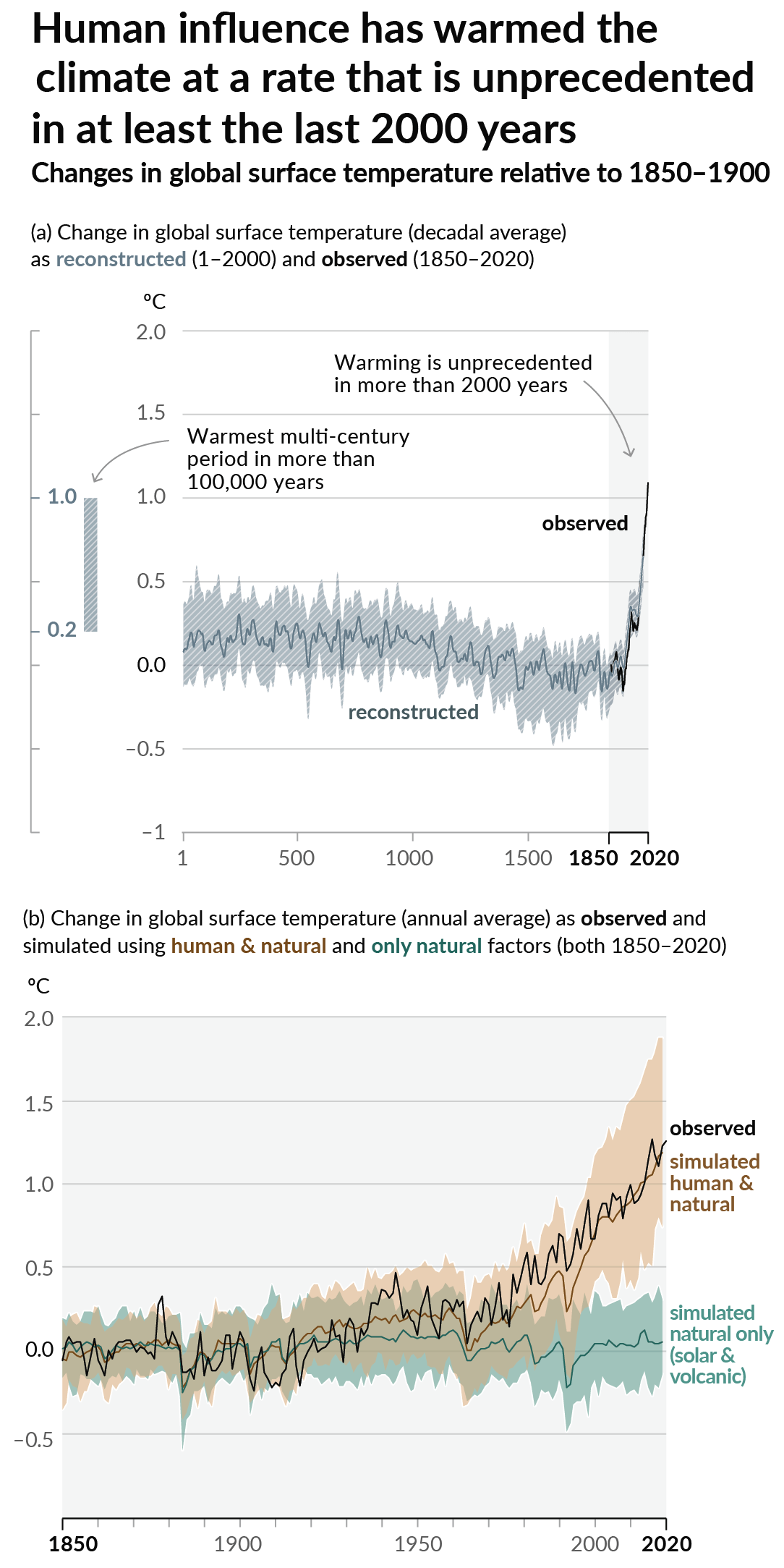
As a starting point, the burning of fossil fuels, and to a lesser extent deforestation and release of methane are responsible for the warming in recent decades:
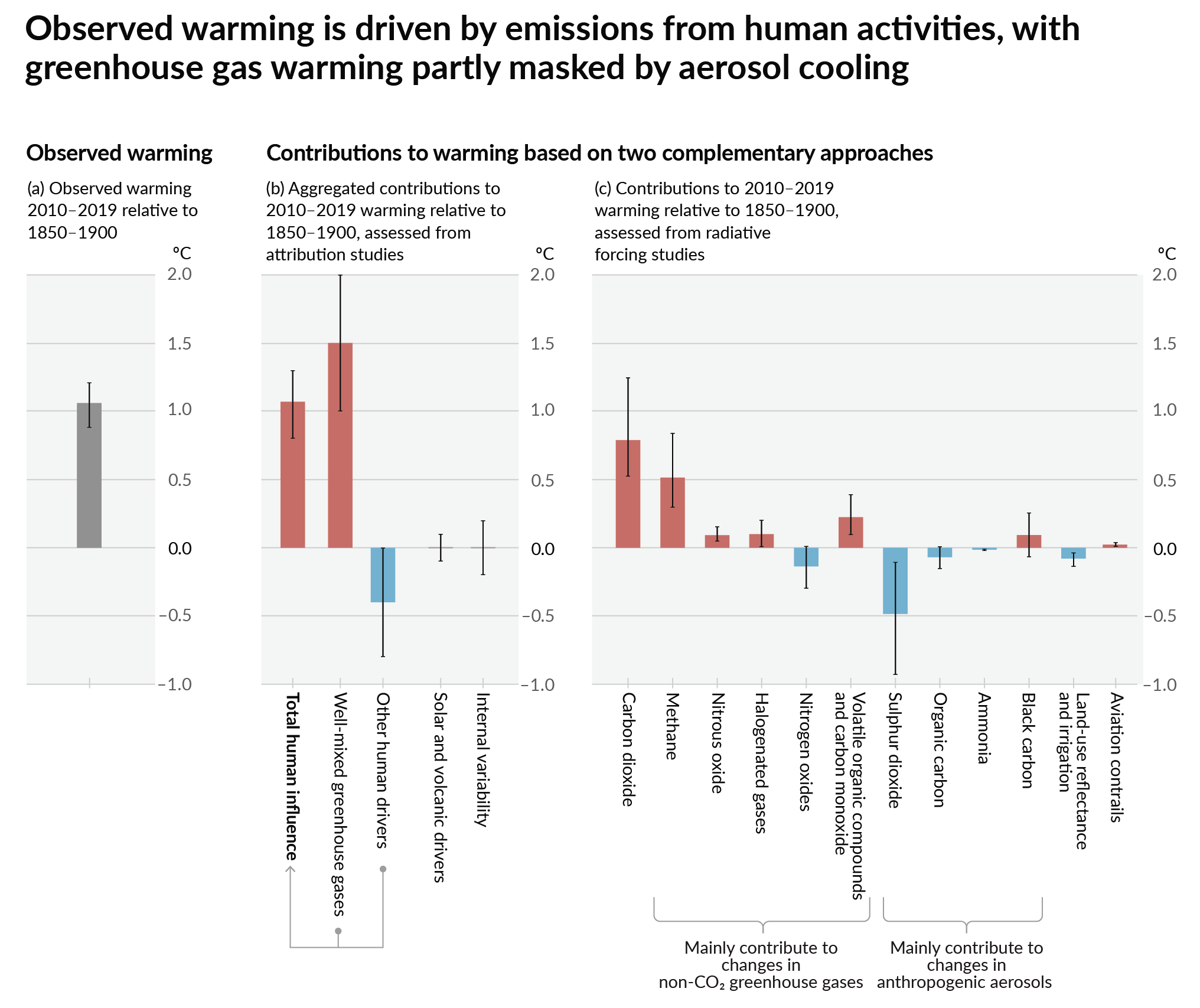
How much each change to the atmosphere has warmed the world:
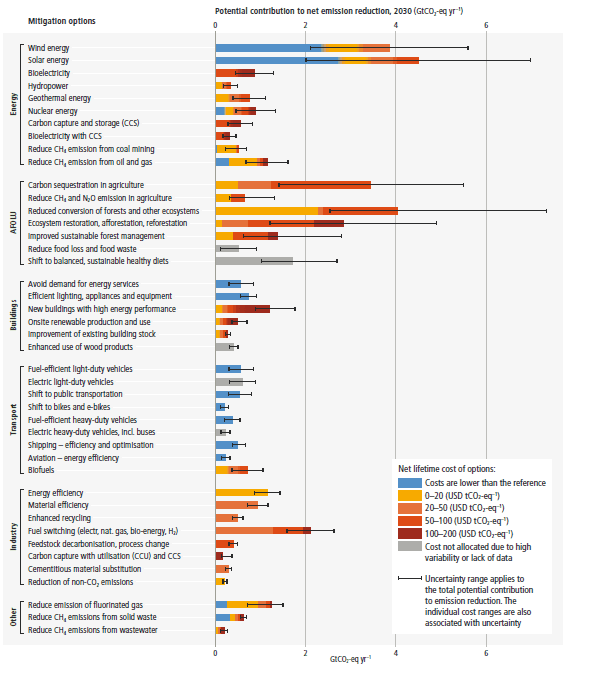
Recommended actions to cut greenhouse gas emissions in the near future:
Anti-science, inactivism, and unsupported conspiracy theories are not ok here.