37
submitted 1 day ago* (last edited 1 day ago) by relianceschool@slrpnk.net to c/climate@slrpnk.net

Above-average temperatures are forecast across much of the country during the holiday, but the core of the warmth — where departures from normal will be the largest — is anticipated to extend from the Front Range of the Rockies into the Central Plains and Upper Midwest.

Over Christmas Eve and Christmas Day, daily high temperatures in these regions are forecast to range between 20°F and 35°F above the 1991-2020 climate normals. Much of the western and eastern U.S. is also expected to experience unusual warmth, 5°F to 15°F above average.

Holiday high temperatures are anticipated to reach the 60s to 80s from the Plains to the Gulf Coast. For many, this warmth will challenge or break daily high temperature records. On Christmas morning, low temperatures are expected to range from 40°F to the mid-60s, or up to 25°F above average for late December.

Climate Shift Index (CSI) levels of 3 are forecast across the Central and Northern Plains, Upper Midwest, and the Southwest, meaning human-caused climate change made this warmth at least 3 times more likely. CSI levels of 5 — the highest possible — are forecast in portions of Missouri and throughout the Southwest and Mexico, signaling an exceptional climate-influenced event.

top 6 comments
sorted by: hot top controversial new old
[-] HubertManne@piefed.social 4 points 1 day ago

Its funny in early november the forecasts was for this extreme winter that would stay cold all the way into febuary. Maybe march. Its kinda funny firstly because its painted as extreme but it would be what I would call a typical winter before the 90's. Like just average. It was the way winter typically was. Then on top of it the long range forecast break down and by the end of november its now showing the weather breaking and then being unseasonably warm right through febuary. This has basically been the new reality of winter in this area for the new millenium. You get about a month of winter in december or january and the rest is unseasonably warm. Typical to me way back when was by sometime in december but as early as november. Winter would set in and then not really break until march. You could get a situation where most of the snow was gone mid season but it was generally a long process of no snow along with high temps getting into the 30's. With all the dry air much of it was due to sublimation usually. It usually did not last long before more snow took its place.

[-] QuandaleDingle@lemmy.world 2 points 1 day ago

I grew up in the '00s and even I can feel that the weather has changed. Not good, man...

[-] Gerudo@lemmy.zip 2 points 1 day ago

Texas was slated for a mild winter this year, I'm about to see the thermometer hit 80 today. And not just today, the next week forecast has 5 days above 78. Mild is an understatement.

Didn't want to be outside the other day because it was too hot and humid.

[-] JohnnyCanuck@lemmy.ca 3 points 1 day ago

FIY you broke the title. Happy hot holidays!

[-] Triumph@fedia.io 2 points 1 day ago
this post was submitted on 20 Dec 2025
37 points (100.0% liked)

Climate - truthful information about climate, related activism and politics.

7699 readers
292 users here now

Discussion of climate, how it is changing, activism around that, the politics, and the energy systems change we need in order to stabilize things.

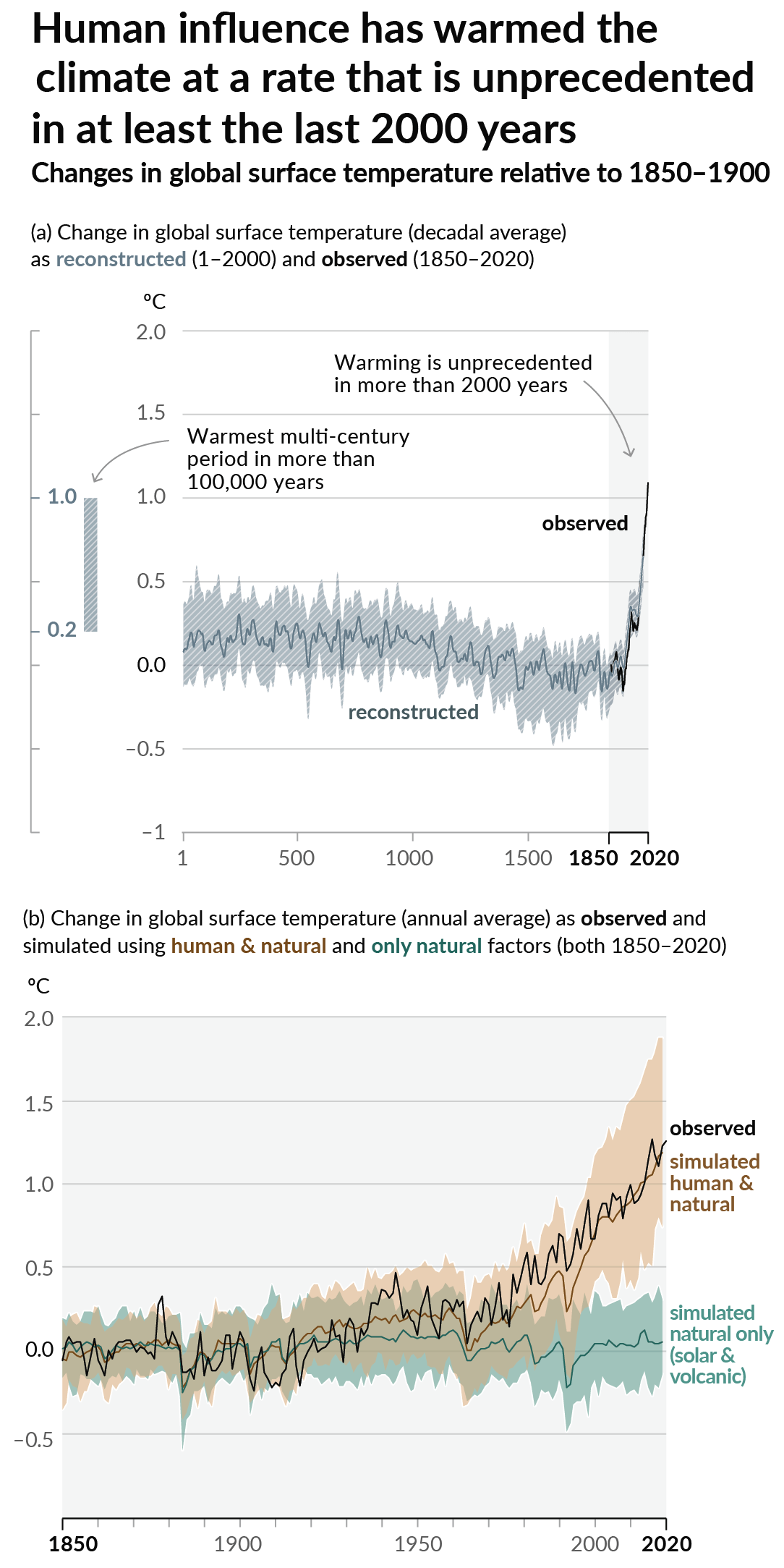
As a starting point, the burning of fossil fuels, and to a lesser extent deforestation and release of methane are responsible for the warming in recent decades: Graph of temperature as observed with significant warming, and simulated without added greenhouse gases and other anthropogentic changes, which shows no significant warming
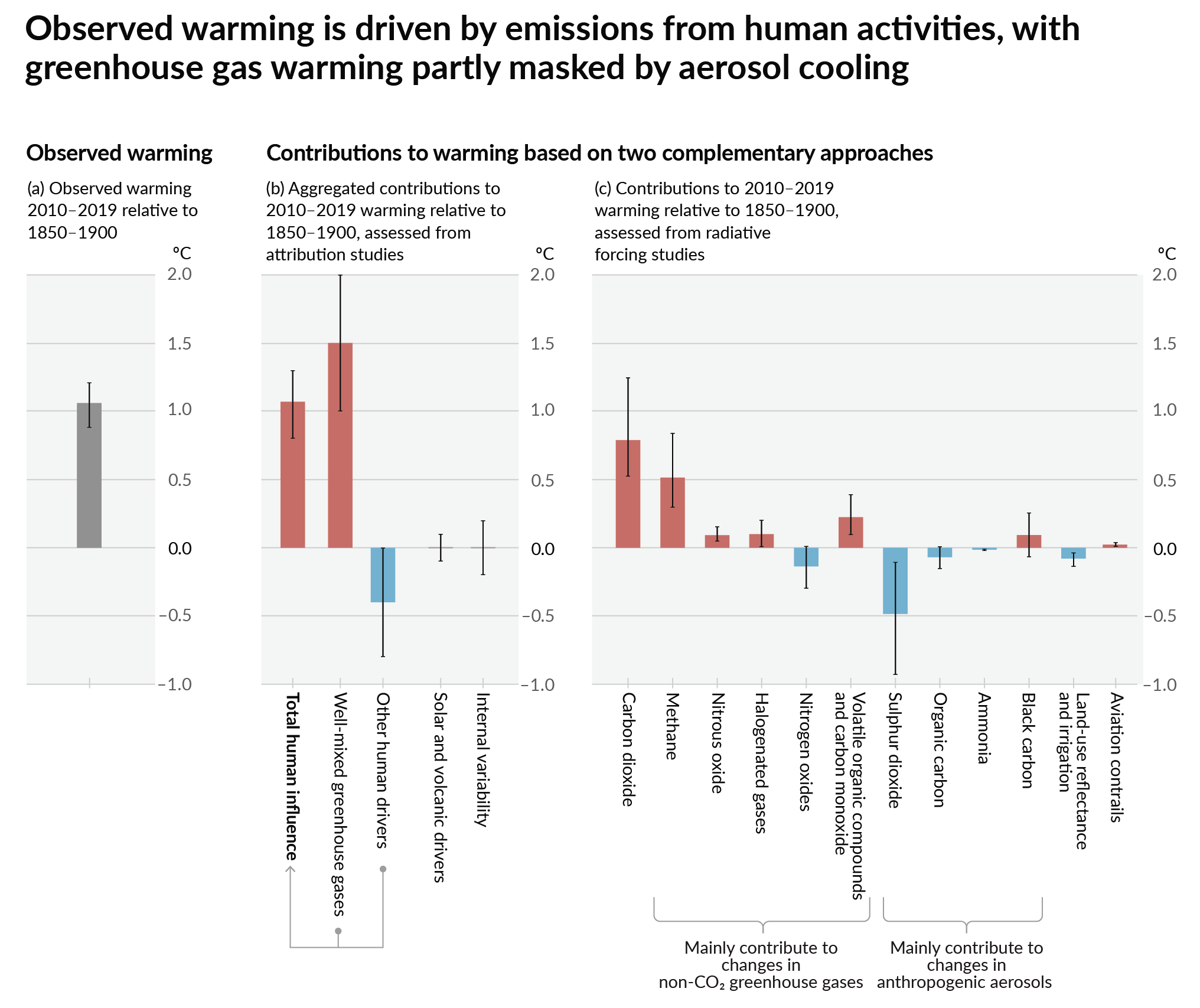
How much each change to the atmosphere has warmed the world: IPCC AR6 Figure 2 - Thee bar charts: first chart: how much each gas has warmed the world.  About 1C of total warming.  Second chart:  about 1.5C of total warming from well-mixed greenhouse gases, offset by 0.4C of cooling from aerosols and negligible influence from changes to solar output, volcanoes, and internal variability.  Third chart: about 1.25C of warming from CO2, 0.5C from methane, and a bunch more in small quantities from other gases.  About 0.5C of cooling with large error bars from SO2.
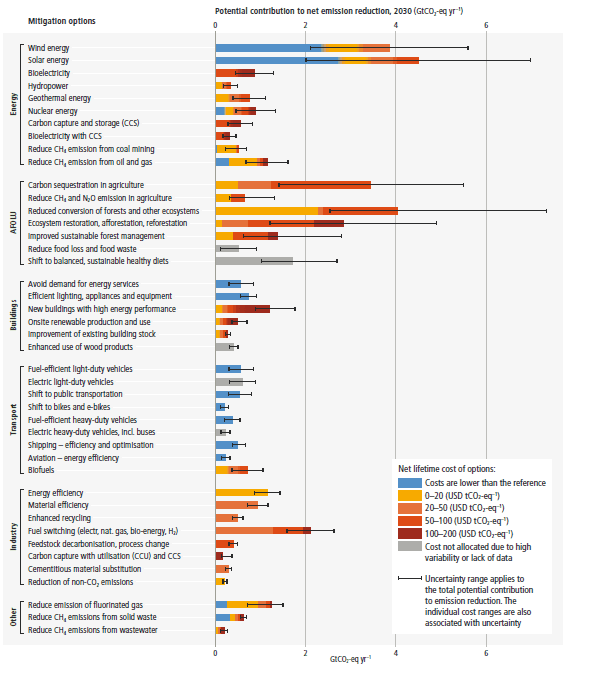
Recommended actions to cut greenhouse gas emissions in the near future:
Anti-science, inactivism, and unsupported conspiracy theories are not ok here.

founded 2 years ago
MODERATORS