114
Scientists know how to phase out fossil fuels. Some countries are listening
(www.scientificamerican.com)
Discussion of climate, how it is changing, activism around that, the politics, and the energy systems change we need in order to stabilize things.
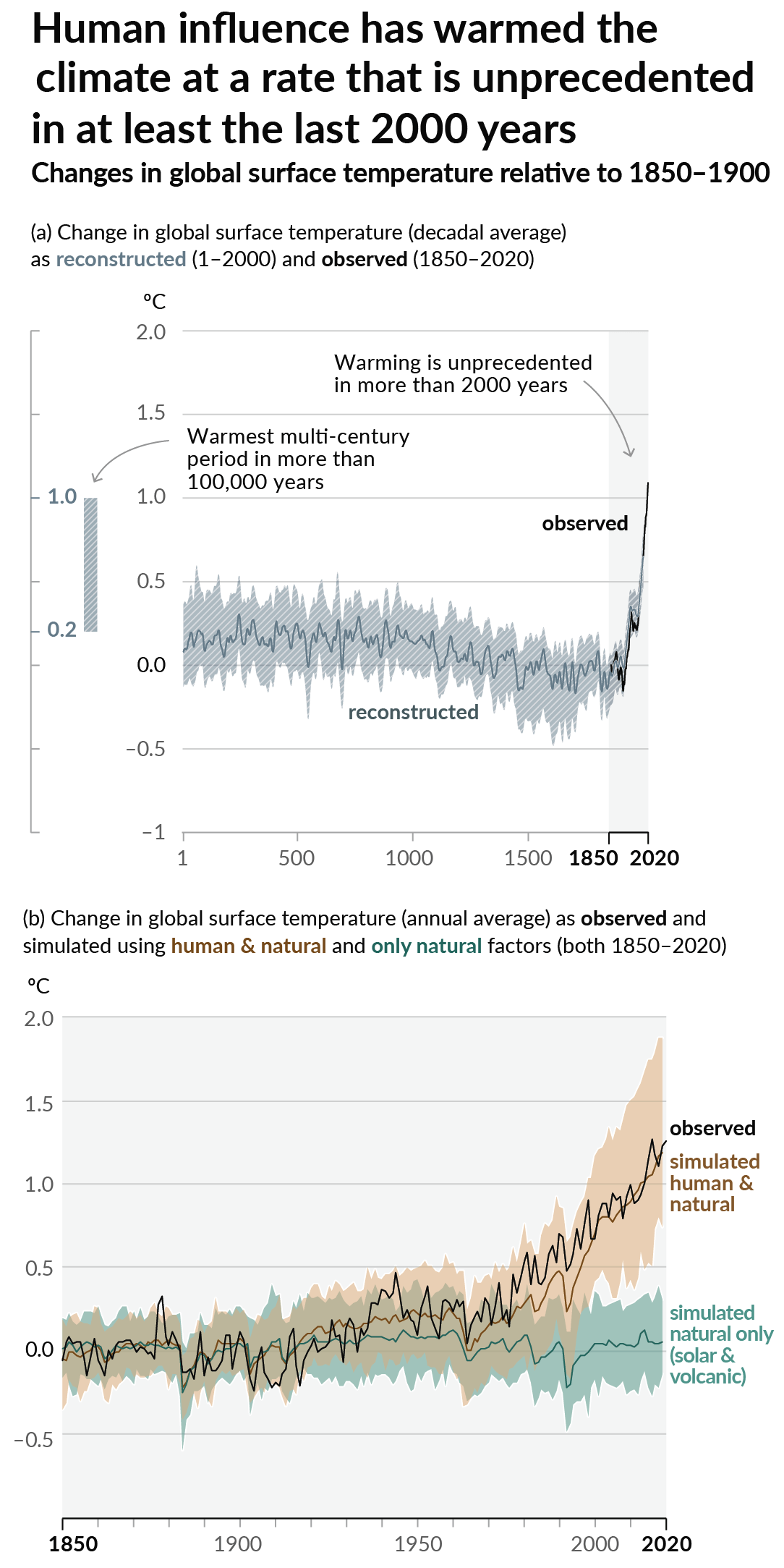
As a starting point, the burning of fossil fuels, and to a lesser extent deforestation and release of methane are responsible for the warming in recent decades:
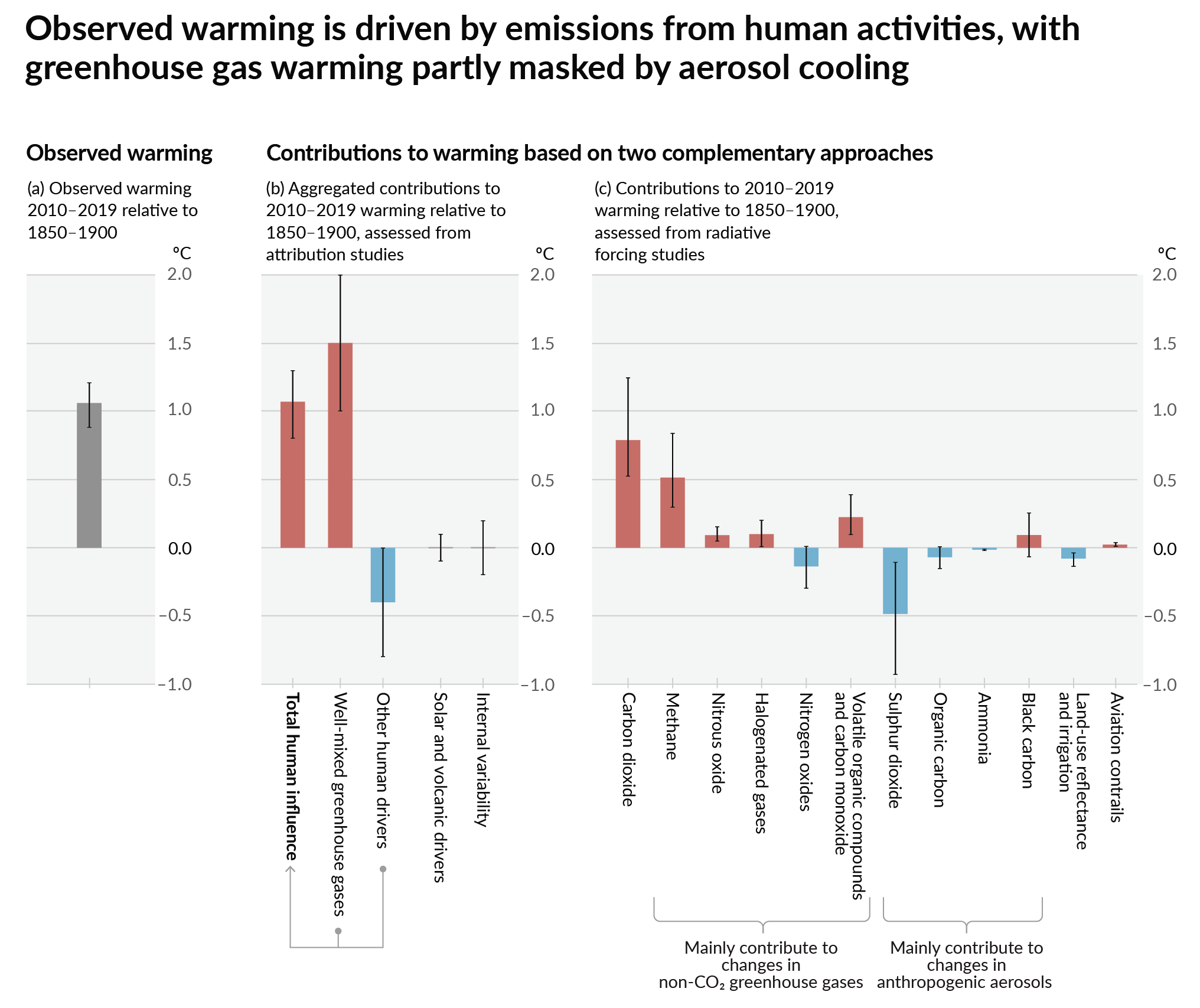
How much each change to the atmosphere has warmed the world:
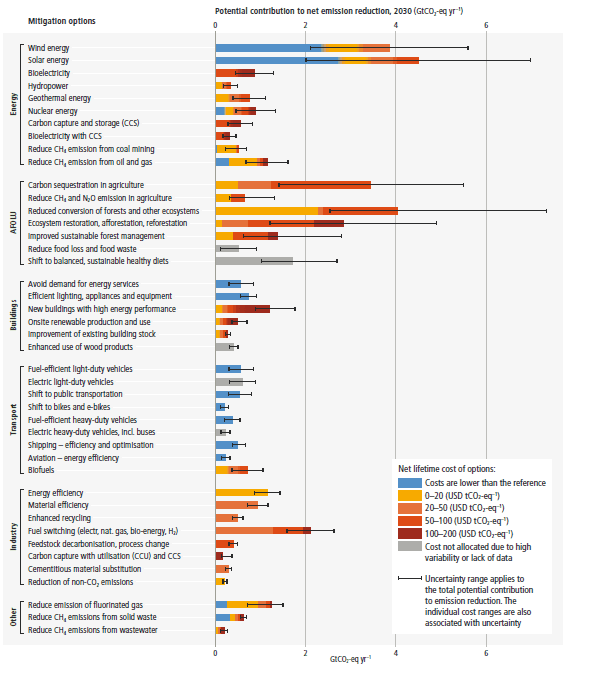
Recommended actions to cut greenhouse gas emissions in the near future:
Anti-science, inactivism, and unsupported conspiracy theories are not ok here.
I think the effiency of eSAF is closer to be around 35-50 %, but I am by no means an expert in PtX (PtL).
But it is still extremely expensive, 6x more expensive than normal jet fuel. And the goal in EU is that by 2030 0.7 % of the fuel mix is eSAF.
I think the biggest challenge is the infrastructure. We are having issues with negative power prices in EU, more eSAF production can be one solution to a more stable grid in places with a high penetration of renewable energy production.
I seriously doubt these are actual round-trip efficiency numbers. Combustion engines have alone only ~45% efficiency and you're adding all loses from the entire production process on top of that.
Again, I'm no expert, but here are a couple of sources on the effiency:
https://montel.energy/resources/blog/what-are-power-to-x-technologies
https://en.wikipedia.org/wiki/Electrofuel
These articles basically confirm what I said. Round-trip efficiency is horrible.
Especially the table from wiki is telling.
Perhaps we are talking about two different things then. I'm talking about the effiency from renewable energy to eSAF, and it seems like you are talking about the efficiency from eSAF to propulsion energy, which then includes the effiency of a combustion engine.
I think it makes the most sense to isolate those two things, or else the number depends on how efficient the ICE is.
But, you are right that the effiency is really low, so the circumtances have to be there, before it makes sense, and those circumstances are a surplus of energy from renewable generators, which inevitable occurs when there is enough renewable power flowing in the grid.
I'm talking about all chain Round-trip efficiency, meaning from electricity to propulsion. It just happens that eSAF patch is extremely wasteful on multiple steps.
Battery tech is much better but you can't use it for large scale transportation, especially airplanes.
There are also limitations to the storing excess power in batteries. The capacity of batteries is one of the obvious.
Electrolysis is better for long duration storage and for larger parks, and batteries have the limitation that you mention yourself, you cannot transport batteries, but you can transport hydrogen.
If you mean transport fuel tank full of hydrogen to power an airplane or truck, it's really awful due to its physical properties. It penetrates materials, hydrogen gas density is horribly low, liquifying requires huge energy effort, and the due to low specific heat it boils away really really fast.
If you want a fuel with bare minimum reasonable properties made out of hydrogen, then you could do synthesis with nitrogen to make ammonia. It's corrosive and toxic, but at least storage requirements are sane. Still it has half of the energy density of gasoline and nitrous oxide emissions are problem when combusting.
Ofc I don't mean transport by trucks...
Have a look at this planned project here that will be using pipeline-based infrastructure for cross-border transmission: https://en.energinet.dk/about-our-news/news/2026/energinet-and-gasunie-deutschland-strengthen-cooperation-on-cross-border-hydrogen-infrastructure-between-denmark-and-germany/
TBH this sounds pretty unnecessary if you have large scale electricity infrastructure already in place. Instead of transporting hydrogen, you can transport electricity for all usecases, not just fuel and fertilizer production.
Haha okay.