124
We need to add 6,000 seats to Congress. I'm serious. | Opinion
(www.usatoday.com)
You need to purge your government of the selfish, the cruel and the corrupt. It doesn't matter what form of organization you choose if you don't keep the assholes out of power.
Start with an automatic retirement age; no one over the age of 65 (for example) can serve as an elected representative.
Honestly, the same should likely apply to voter eligibility - to be honest - but that’s a whole separate argument for another time.
Yeah, and while we’re at it let’s disenfranchise the intellectually disabled as well. /sarcasm
Personally I prefer term limits rather than an age cap because I’d rather see government represent everyone. If a 75-year-old manages to win an election by running a successful campaign, why shouldn’t they govern? But if they’re only in office because they ran unchallenged for 30 years… time to make room for change.
Because if you're not going to be around to see the consequences of the policies you supported maybe you shouldn't be taking part in it.
We don't let children take part in the policies being made even though they will change their entire lives, but we do it because they aren't informed enough for such decisions. Well guess what? Children are often smarter than people who are sun downing and while an old person only gets dumber as the years pass a child gets smarter.
See... That the problem, the quote that best comes to mind is.
" The major problem—one of the major problems, for there are several—one of the many major problems with governing people is that of whom you get to do it; or rather of who manages to get people to let them do it to them.

To summarize: it is a well-known fact that those people who must want to rule people are, ipso facto, those least suited to do it.

To summarize the summary: anyone who is capable of getting themselves made President should on no account be allowed to do the job. "
-Douglas Adams
I read the article, but don't follow the argument. Add some seats, and then each representative will represent fewer voters. So what? How does that fix gerrymandering or make elections more representative?
The easiest solution is of course proportional representation. Can't gerrymander if there are no districts.
But if you must have districts for some reason, then... just don't put politicians in charge of drawing them.
To try and understand how/why adding additional seats to Congress would be a positive change (or really, ANY proposal) - take the most extreme ends of the spectrum:
With 1 single seat, 50.1% of voters would get 100% of the representation.
With 1 seat for every voter, 50.1% of voters would get 50.1% of the representation.
Obviously, not EVERY single person can be a congressman - so the goal should be to find the minimum number of representatives required to optimally represent the populace.
Always nice to look at edge cases, but the 1 seat per voter is never going to happen, not least because that'd be direct democracy, not representative democracy.
For any realistically-sized consituency, as long as the election remains first-past-the-post, if the votes are evenly split among districts, 50.1% of the voters would still get 100% of the representation.
In addition, gerrymandering will still be possible.
As for proportional representation (upthread), it can also lead to antidemocratic anomalies, as can every electoral system. That's because they all have to meet requirements that are sometimes logically contradictory. In existing systems that approximate PR, coalition governments are common, and centrist parties have disproportionate power since they're the difference between a coalition with a majority and one without. So the centrists end up perpetually in government and often prevent the larger parties from meeting their manifesto commitments.
It would make it harder to bribe congress.
We'll it would be harder to pick some Democrats from this neighborhood and a bunch of Republicans from that neighborhood if the district size is only one neighborhood
Also it would allow for more specific representation. Using myself as an example, my district is basically my county plus a couple small parts of some neighboring counties. One end of the county is pretty rural, the other half butts up against a major city and pretty much just bleeds right into it. We have some ridiculously wealthy old money areas, and we have some that look like they were plucked from a movie about gang violence. There's a few towns here that I've legitimately never even had to drive through. It's kind of insane that all of these different areas are being represented by the same person, we have very different and sometimes conflicting concerns. And if I needed to go to my representatives office for any reason, I'd have to drive about an hour to get there because of course she's set up shop at the far end of the county from me.
Personally, I think the ideal way to draw districts is to kind of have voters do it when they vote. Give them a map, have them select the areas where they live, work, shop, drive through regularly, or have other connections to until they've selected an area with a big enough population to be a district. Then feed those maps into a computer and have it average them all together to generate the new district map.
We’ll it would be harder to pick some Democrats from this neighborhood and a bunch of Republicans from that neighborhood if the district size is only one neighborhood
They'll just take half of one neighborhood and half of the other.
All Congressman don’t represent the same number of people because they won’t expand the number.
I'm not necessarily sold on the idea that reps of a given state should only be responsible for a very small subsection of people who are likely poorly informed. Just thinking of my own representative, who won against a progressive based entirely on name recognition rather than policy, it seems abundantly clear that money can easily touch all races whereas educated voters and advocacy may not exist in enough districts to be meaningful. Money can, and in quantities above the median income with ease.
After reading the article, I think there's a inherent assumption that more means harder to gerrymander, but every republican gerrymandering recently released is computer generated. What would prevent them from arguing the districts of densely black areas thinly sliced from urban areas and then expanded out to suburbs is legal? When computer modeling and accurate voter information is supplied the possibilities of gerrymandering are not remotely hampered by increased resolution of the electoral maps. The districting will come to head with the notion that the same district even be contiguous. Do you trust SCOTUS to affirm it needs to be?
I'd argue that it is a lot easier to inform the public when the campaign doesn't have to cover as much area and that it becomes more difficult to buy every race when there are more of them.
Sorry for the edit after your post. I think buying races isn't harder when there's more of them, but organizing for them might be. I'd be open to change on that opinion, but eventually wouldn't you hit a point of diminishing budget for a small candidate that they can't afford a single commercial whereas the corporate candidate could afford multiple?
Edit: Eventually the resolution of targeted ads starts to fail too relative to the district borders.
What would shape your opinion more: being bombarded by ads or the candidate showing up at your school to do a town hall and answer questions?
If we make things small enough, where in a typical campaign a candidate can meet their constituents at least once, does being outspent on ads matter as much? Doesn't it at least make break-through candidates more likely if only because national parties have to spread out their spend?
The entire electoral system that is based on a popularity contest is just really broken. It's a testament to how perfectly "broken" the American electoral system is that we are still using an electoral system created for a 13 colony slave based society made to favor rich land owners.
I say "broken" because it's really not. It's actually very well written to ensure the system favors the power of the ruling class over the masses. What we are seeing now is the confidence of that class raising to such a high degree that they are no longer pretending that they have maintain that illusion.
Making the granularity finer doesn't do anything to resolve the underlying structural and governance problems.
I love how most of the replies here are people spitballing ideas for fixing the government, as if there weren't a bunch of nations who have already solved these problems which we could take inspiration from. Basically every democracy that was founded after us has looked at our mistakes and fixed them in one way or another.
In 1787 the population of the country was : 4Million. With roughtly 250,001 being able to vote. 250,001.
The current voting population 250,000,000
250 THOUSAND to 250 MILLION -- a THOUSAND times more Voters. A THOUSAND Time MORE voters.
On a similar note, we need to boost SCOTUS to 29 or 31. The party membership of the court shouldn't be so tight that one bad faith president can negatively impact American policy for the next half century.
29 justices, with rolling term limits, so every president gets to appoint a few, but not enough to screw the results.
As long as there's a rule that they can't be filled with Democrats or Republicans, it should be able to help democracy
"Let's keep all the existing problems slightly repackaged and create new ones." -VP at a Think Tank
No wonder we're in so much trouble. With friends like this who needs enemies. Better solution:
No more geographic attachment for the House. Proportional representation time. In 1776, local concerns were much more distinct. Now, Anywhere USA is everywhere. Plus, Senators are still bound to states for people who worry about that. Instead, parties win seats based on a percentage of the vote they receive and can assign members (which they do already, just with more steps) as they see fit. Gerrymandering solved, also we just broke the terrible de facto 2 party system.
parties win seats based on a percentage of the vote they receive and can assign members (which they do already, just with more steps) as they see fit. Gerrymandering solved, also we just broke the terrible de facto 2 party system
Nope. If people only get one vote (vs, say, ranked choice) then they have to be tactical about their one selection. This forces "Abilene effect" voting.
Having a district cross a state border will be a problem when a Rep has to navigate two separate state governmental systems when trying to access help for their constituents.
Get rid of the parties and just have a government of the people. Vote on issues, not for people.
The FF tried that and it immediately failed, leaving us with a system ill equipped to handle political parties.
FF?
Founding Fathers
A 6,000 seat house would be less functional, not more functional. You may reduce the gerrymander, but cripple government.
Almost there, add 300 million (equal to adult American population) more
do you want a legislature that votes once a century?
Congress should be huge like the writer says, but also chosen at random like jury duty.
Every January, NYE, the ball drops...and 10,000 new names are chosen. They're sworn in a few weeks later, when we used to swear in the new President.
No fund-raising, no campaigning, just 10,000 Americans of all walks of life, set together to steer the ship.
This is fraught with problems, but just to make my point: those potential jurors go through the selection process where they are whittled down. Conflicts of interest, bias, and more are all taken into consideration.
There’s also the fact that many Americans are just idiots. A not insignificant number of people legitimately believe the earth is flat.
Welcome to the discussion of US Politics!
Rules:
Links must be to the original source, not an aggregator like Google Amp, MSN, or Yahoo.
Example:
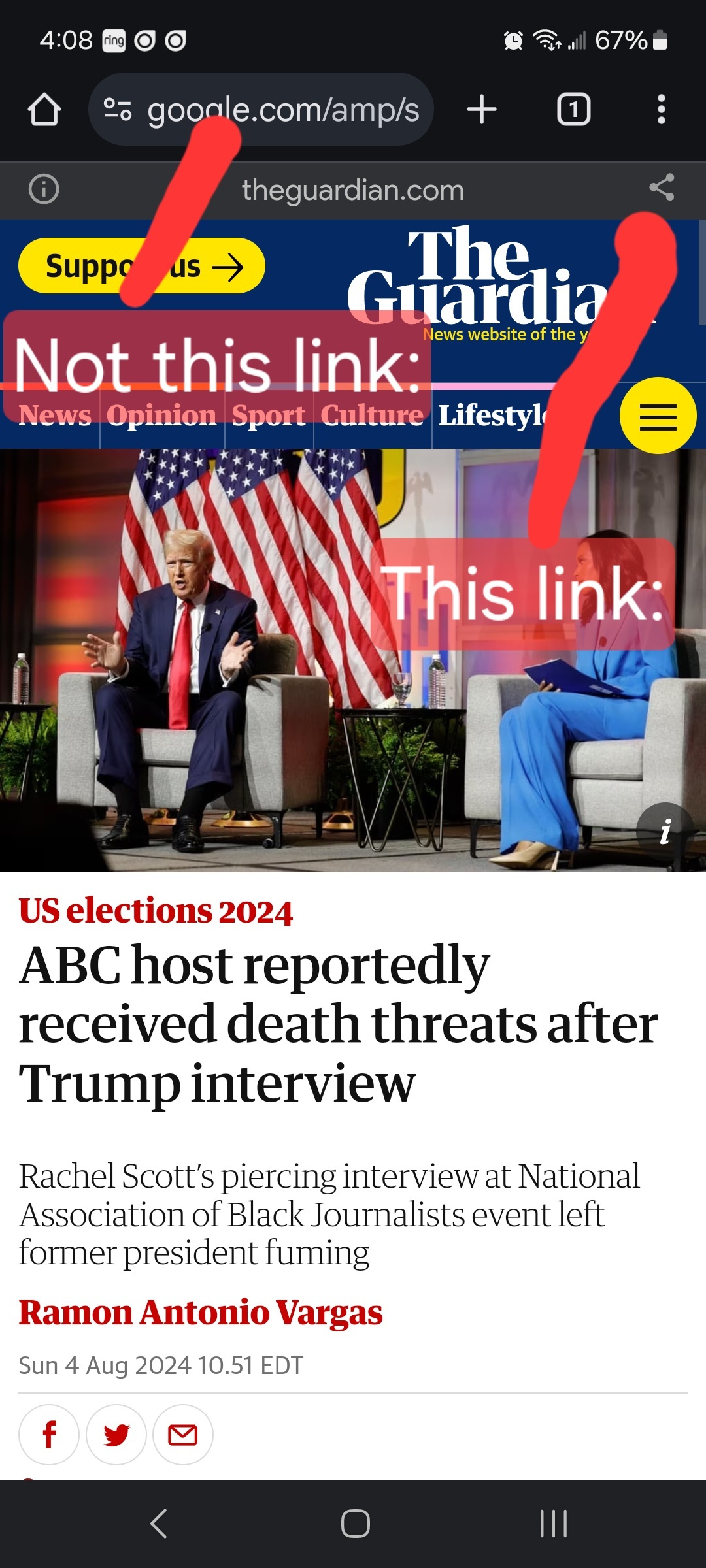
We ask that the users report any comment or post that violate the rules, to use critical thinking when reading, posting or commenting. Users that post off-topic spam, advocate violence, have multiple comments or posts removed, weaponize reports or violate the code of conduct will be banned.
All posts and comments will be reviewed on a case-by-case basis. This means that some content that violates the rules may be allowed, while other content that does not violate the rules may be removed. The moderators retain the right to remove any content and ban users.
That's all the rules!
Civic Links
• Congressional Awards Program
• Library of Congress Legislative Resources
• U.S. House of Representatives
Partnered Communities:
• News