171
Installed Linux for the fist time in Feb, I've now started saving ISO's
(media.piefed.social)
So it begins.
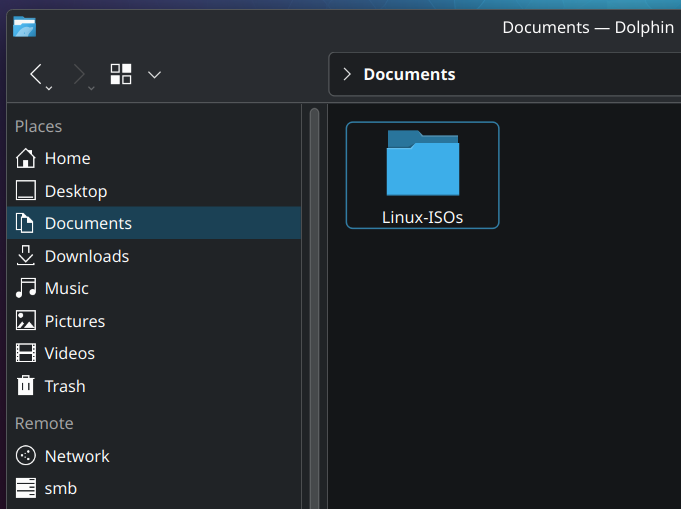
I've been flashing my USB often enough that it's now worth it to keep all my ISO's neatly to use them when I need them. I plan on buying 10 USB sticks to just have ready when ever I need a specific version.
I'm visiting family now, so time to upgrade their Linux Mint to Kubuntu
what is bsd?
ive heard of it, but not really seen or used it
Several different operating systems, such as FreeBSD, NetBSD, DragonflyBSD (the latter one having a live system and being the easiest to try out). Those have their history based in BSD. But thatʼs all bit too much to fit in s reply here.
Unlike Linux distributions, those projects develop a kernel and the other parts together and make an OS.
Most software will be available on BSDs and on Linux distributions.
So kinda like linux but not linux?
UNIX was a proprietary operating system developed by AT&T that was originally shipped with source code.
BSD started as a set of enhancements to UNIX at Berkely University.
BSD developed into a fully independent UNIX distribution. BSD code was available for free and always non-proprietary.
In the early 90’s, AT&T launched a lawsuit to stop BSD from being distributed.
During that lawsuit, in 1991, Linus Torvalds created Linux. It was written from scratch to be like UNIX as Linus liked UNIX but could not afford it.
In 1993, BSD won its lawsuit and FreeBSD was born. But by then, Linux was already getting lots of attention. FreeBSD, while technically superior at the time, has never caught up in terms of popularity.
Linux uses the “design” of UNIX but is not UNIX. FreeBSD is considered “real” UNIX. Both implement the POSIX standard.
FreeBSD has always been focussed on servers. There are other BSD “distributions” that focus on different things: OpenBSD (security), NetBSD (portability), DragonFly BSD (innovation/performance). Some people consider macOS to be a BSD.
There are also “desktop” spins of FreeBSD like GhostBSD or MidnightBSD. FreeBSD recently has had more of a desktop push focussing on things like WiFi and power management. But it has nowhere near the hardware support that Linux has.
Linux, technically, is not a full operating system. It is just a kernel (the bit that talks to the hardware). The Linux kernel is released at kernel.org.
Linux “distros” collect a bunch of software to run on the Linux kernel to create a Linux distribution (full operating system). This includes key components like C library, core utilities, compilers, and init systems. Many Linux distros use software from the GNU Project for these components. But other Linux distros use non-GNU software for this, sometimes even software created by BSD.
As others have said, the BSD systems are built as an entire OS by a single team. FreeBSD 15 was just released. The entire software stack was created as a unit, including C library, utilities, compiler, and init system.
IRed Hat Linux is kind of developed as a full operating system as well as they are heavily involved in the kernel, are the primary contributors to the GNU tools, sheppard GNOME, and created Systemd. You could argue that Red Hat is the de facto Linux platform and that others distos build off that. But not everybody would agree.
So, Linux is more like UNIX but not UNIX (created in 1991) while BSD is UNIX (in continuous dev since the 70’s).
As a desktop OS though, Linux is substantially more popular than any BSD and so, these days, the tables have turned and the BSD variants often have to work to stay compatible with things that appear first on Linux.
Linux and BSD have the same heritage, but took slighlty different paths... so they're cousins.
Look it up on Wikipedia, etc... it's an interesting bit of history.