163
Why don't more distros use this method?
(www.virtualizationhowto.com)
It's very nice to not have a dozen different versions of the same distro to parse through and figure out that are simply the same distro with a different DE. Moreover, very few of them offer this many options.
Cachy could be doing a better job explaining what the user is looking at here and who each of these is for. Pretty easy to sum up in 1-2 sentences...
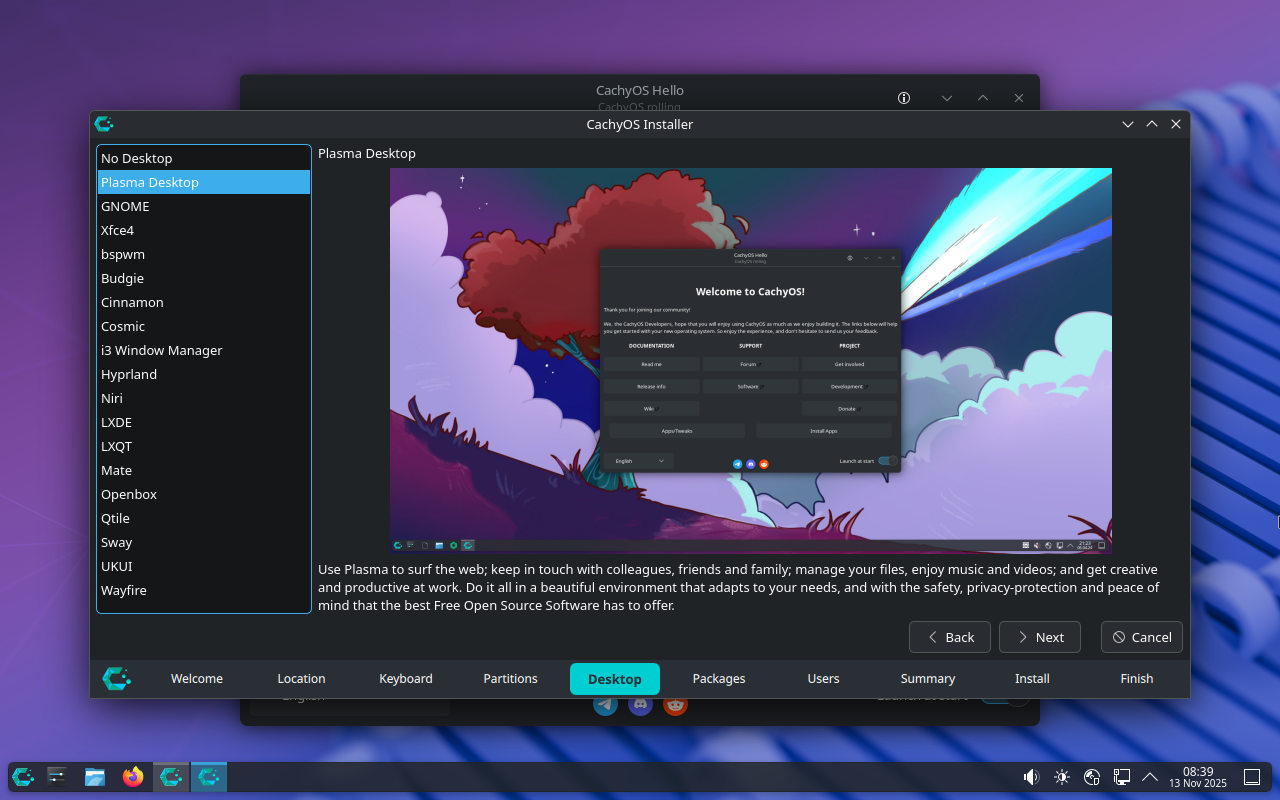
this is just calamares, the most used installer across the span of linux distros.
on the question of why this approach vs dedicated desktop environment installs, well, ive always wondered about the pros and cons on that too. one pro is that with a dedicated DE iso you dont need an internet connection to install it. otherwise im not sure why people would choose one or the other.
That's a good reason. I didn't realize this one did.
It’s not 100% true that you need an internet connection…your install media will just be unnecessarily huge since 100% of users will only be using part of it. And, you’ll have to pay to host and distribute it, most for no reason, every time.
It would be cool if they did make an “everything” image for offline installs though; as preparation when when they take away the internet…
I DLed Cachy with the torrent. Another thing I wish more distros would offer, haha! It was 2.8GB. I'm not sure if that's big or not really, I don't typically pay attention.
I had an Ethernet cable connected so I wouldn't have had to connect it manually, that's why I don't know if it was necessary.
I don't think I've ever encountered a distro that doesn't offer a torrent download option, since it saves the project expensive hosting costs.
Tumbleweed doesn't offer a torrent because there's a new iso nearly every day.
That kind of case makes sense, actually.
Well now you have. Just the first one off the top of my head.
Wow, that's wild. I guess that's what you get from being such a young/niche project, they haven't had the time/dewmand to come up against the problems that all the other distros had to solve years ago.
~~You're just lying.~~^[Meta-joke I just had to make. If you know, you know. In actuality, you simply didn't know better.]
Not on their website, but it does elsewhere: https://fosstorrents.com/distributions/bazzite/
The website for the torrents is (at least) found within Bazzite's documentation.
Debian has this (well, for sources at least) and I think it's somewhere between 20-30 DVD images for actually-everything. Maybe not something for the day-to-day but great to keep on hand for preppers and the paranoid (:
I’m not quite there yet to the point of archiving actually-everything, but I’m getting there
Simplicity for users and support staff.
I don't think that the average user cares for customisation far beyond wallpaper, and perhaps theme. Note I'm not saying average Linux user, I mean average person using a device. Think your aunt who can't plug in the printer. Faced with too many options people shut down.
If you have a distro and need to offer support for it, it also helps if you can write guides and instructions for a single type of scenario. With Windows you can say "right click the start menu, click device manager..." etc, but that's not quite as easy on Linux. You can always direct people to the terminal, but again, the average user is likely to balk at the idea.
Choosing a dedicated DE means you have less to maintain, and less to support, and can focus your efforts elsewhere.