163
Why don't more distros use this method?
(www.virtualizationhowto.com)
It's very nice to not have a dozen different versions of the same distro to parse through and figure out that are simply the same distro with a different DE. Moreover, very few of them offer this many options.
Cachy could be doing a better job explaining what the user is looking at here and who each of these is for. Pretty easy to sum up in 1-2 sentences...
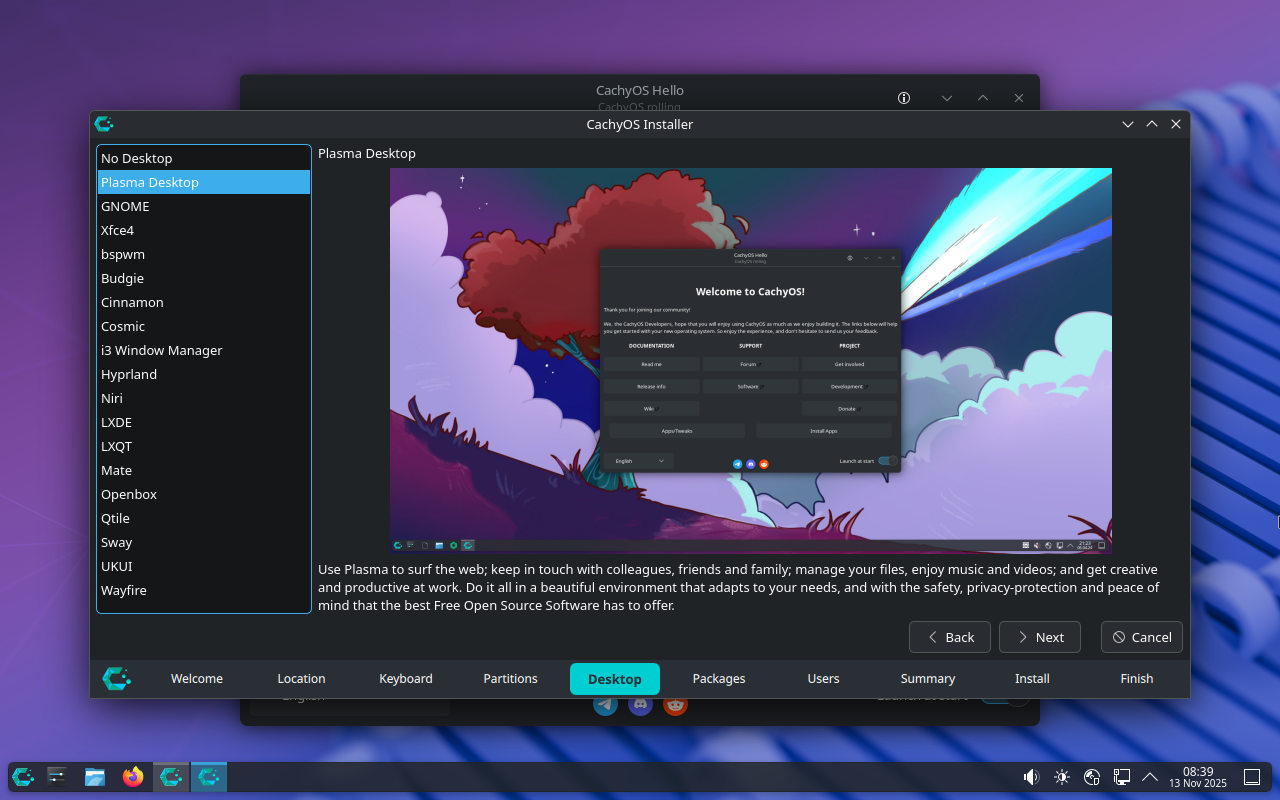
Ho much does the screenshot you posted say, that the screenshots on the Mint download page does not? Other than giving you more options, which can overwhelm new people.
Some distro's really like doing their curated live environment for each environment, so you can test it out before actually installing it.
CachyOS only has 2 ISOs, both of which are very clear in their purpose (Desktop and Handheld). Not 4 different ISOs with no clear delineation to speak of.
If you read the OP I also said:
Sure, but presenting DE choice inside the install will confuse the mythical new user.
But I agree with you. A lot of download bandwidth and hosting storage could be saved by doing what Cachy/Endeavour ISO's are doing.
The new user often has to choose their DE regardless. This just moves it from the webpage where they're presented with 3 or 4 different "distros" with different names for some reason, all under the same ISO, which I would argue is far less confusing (especially if presented with the relevant information during the install).