107
Australia proves that solar can be easy and widely adopted
(www.volts.wtf)
Now if only I could afford a home to put a solar panel on.
In Sweden, people – wealthy home owners – have gotten a lot of public financial assistance for mounting solar panels that would either way have paid for themselves in a matter of years, lowering electrical bills and raising house prices for the owners.
Overall that is a good thing, the pros of increased solar adoption outweigh the glaring inequity, but all the same it's hard to feel that it's a part of the general fuckery of governments competing on who can pamper the upper middle class the most. Sweden also subsidizes mortgage interest and has essentially abolished (hard-capped at a low.level) the property tax on private homes. And Sweden has in recent years given financial relief to households based on their electrical consumption, I.e. very little (or nothing if electric is added to the rent) to renters and most of the money going to people with big houses and year-round heated pools.
The discussion on equity needs to enter the debate on things like incentives for solar panels on private homes or grants for energy saving insulation. These are good things, but the money can't just stack up on top of other political favors to the wealthy. Less useful subsidies need to go. They need to replace other benefits.
I guess a big difference is in Australia we have a lot of land and a lot of sun. That money could be used to fund public solar farms and providing electricity for all, yet it and so many other social benefits go directly to the house owners.
I don't know how it works in Australia, but a plus to subsidizing solar installation on roofs is that the home owner still has to co-invest for a considerable part, so you kinda get a leveraged build out, as opposed to the government directly building installations. But the balance between private and public good should be weighed carefully all the same.
Im very pro rooftop for this reason. The most efficient place to generate electricity is where it will be used. The more transmission you need, the higher the cost. If the majority of energy is generated at the point of use, or close to it, transmission lines are only needed to balance out the margins
No, no. You START with the solar panel and work your way up.
I'm not into rocket appliances, but I would work down from the solar panels.
The only problem is that in areas with higher populations, Australian residents now PAY to export solar energy to the grid instead of getting paid for exporting solar energy
That's just the invisible hand of the market directing people to use batteries to store the cheap power and export in the evening when the price goes up again.
Also it's because the big coal plants can't quickly turn on and off, so theres too much supply basically whenever the sun is out nowadays.
I mean you can literally just kill your feed, often times remotely, if that is happening (and a problem for you)
Lots of people can deal with many problems, that doesn't mean they aren't problems
There hasn't been enough infrastructure investment and the cracks are showing. Solar energy going to waste, not getting paid for it, or having to pay to export it are all non ideal
That's not accurate. When the grid doesn't want my excess solar, it just stops accepting it. My solar panels then sit idle until the grid wants more.
In fact, that doesn't happen much either, but the grid does routinely take only part of my capacity, say, 2kw, when the panels are capable of generating 6-8kw. The grid takes an equitable amount from all houses in the zone.
It's nice that your retailer turns your exports off
What the fuck? Okay, sorry, I made my comment based on Western Australian electricity providers, not NSW. Modern solar systems here use smart controllers that can turn off export as required. You can also join the Virtual Power Plant network where they will pay you a premium to supply power from your solar AND battery during huge power events where they would otherwise need to spin up a gas turbine.
But I've never heard of charging the homeowner for exports. This must have a specific application to grid tie solar that doesn't have a smart controller to limit grid export when the grid doesn't want power and they have to transmit and consume it somewhere.
My system first supplies my consumption needs, then charges the battery til it's full or at a max of 5kw, then exports power to the grid if the grid wants it. If the grid doesn't want it, solar only generates my consumption needs. I never get a charge. Although I also never get paid, technically, my exports just generate a credit on my power bill, so I have a positive credit on my bill of hundreds of dollars. But because I almost never need to import power from the grid, this will forever go unused.
I don't know how they justify it but my assumption is that the grid has not been properly maintained and they're unable to automatically control solar feed in for many areas. Sounds like WA has it right. Maybe will be less of a problem once the snowy 2.0 battery is online in 2027/2028
In NSW there are a huge number of competing retailers, each with their own incompatible smart meters to each other. We had to pick between at least 3 different meters for our place for the solar upgrade even though there is one distributor here
Yikes, that sounds like a mess. In WA we have one fully connected grid (SWIS) and one provider (synergy). Western Power used to be the provider, but now they only run the power stations and maintain the infra. There are multiple electrical generation companies that run power stations, but the customer doesn't deal directly with them. They all sell power to synergy, who sells it to the customer, and synergy pays western Power to maintain the SWIS.
There are some pockets that live outside the SWIS with a different arrangement but they are a tiny minority.
Synergy is owned by the state govt, so there is a monopoly, but it's more benevolent to the customer, and hostile to the generators. They do what they can to keep prices low. But the infra is aging, and western Power spends increasingly more each year to maintain it and replace wooden poles. Western Power is also wholly owned by the state govt.
Govt owns 49.6% of Ausgrid here lol, I think the rest is mostly AusSuper
Just a good reason to install batteries and not rely on the grid at all.
And best of all, none of the fears associated with wide spread solar have materialized into real world problems.
What were/are these fears?
Unable to predict electricity use and generation on a large scale, leading to unstable electricity network (e.g. peak generation at 12 o clock while everynone is working).
This seems like a problem that can be solved now that everything is connected to the Internet and has a computer inside. Turn on the water boiler only when the price is less than 10ct/kw. Run aircon or heater only when it's cheap, and insulation will keep the temperature constant for half a day.
Insulation? In an Australian house? Not likely mate.
Guess who just discovered Virtual Power Plants
Discussion of climate, how it is changing, activism around that, the politics, and the energy systems change we need in order to stabilize things.
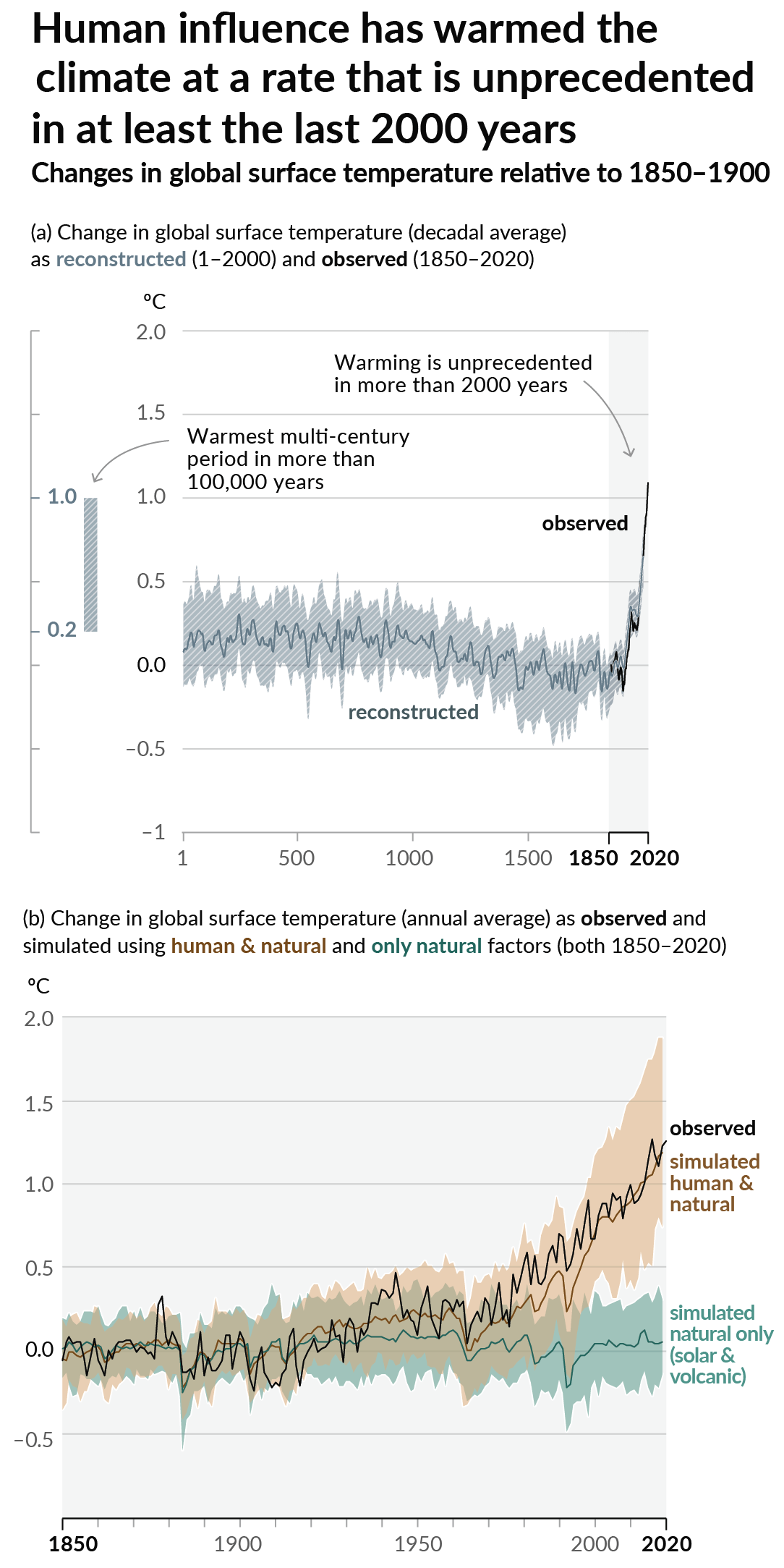
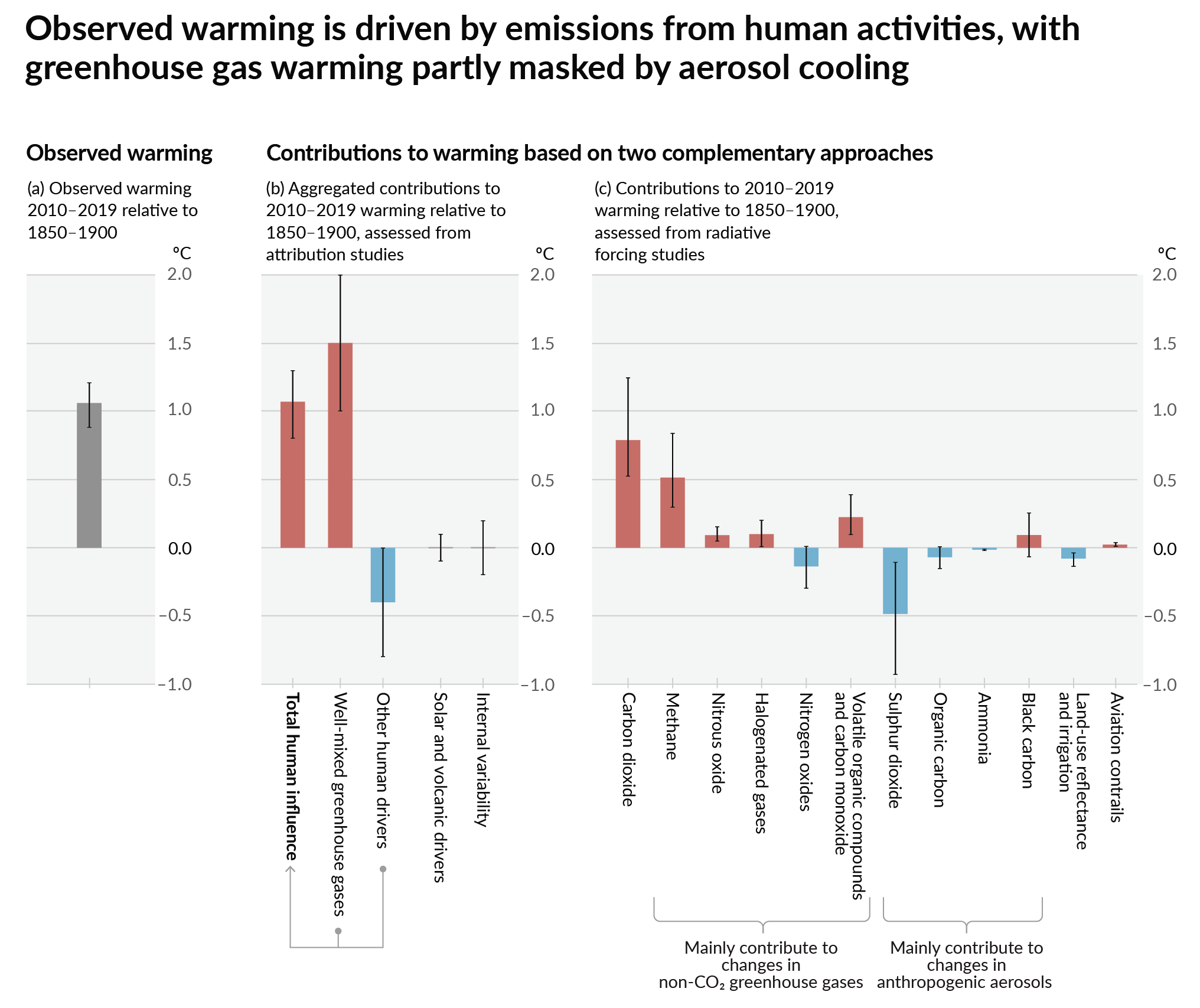
As a starting point, the burning of fossil fuels, and to a lesser extent deforestation and release of methane are responsible for the warming in recent decades:
How much each change to the atmosphere has warmed the world:
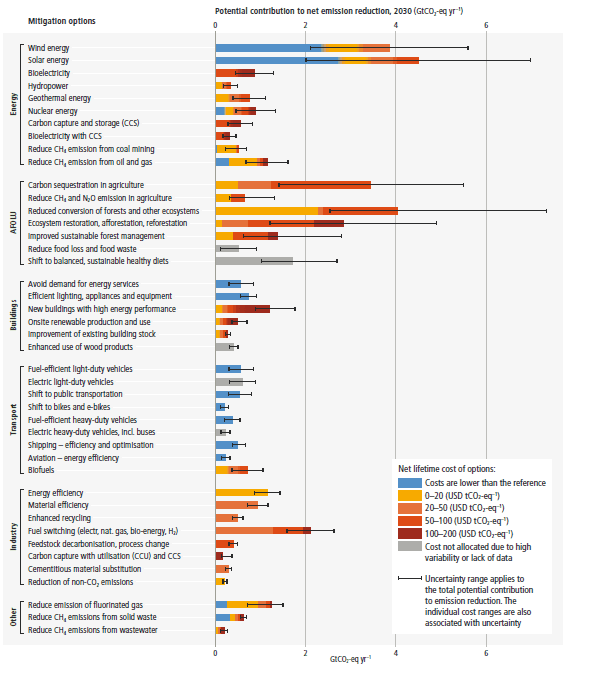
Recommended actions to cut greenhouse gas emissions in the near future:
Anti-science, inactivism, and unsupported conspiracy theories are not ok here.