I think so, there isn't much else that can explain the classroom scene where half the class are all playing the same goofy animation at 5 frames per second, mostly in sync. It would have looked better to have them not moving at all, so at least some of the jank was a stylistic choice on gamefreak's part.
Pokémon
Is that still scarlet and violet? Because if so, I don't think that was a problem with the switch.
https://wiki.openstreetmap.org/wiki/Key:fee
Seems to cover what you're asking about. Found it from here if you want to see some people discussing it for some context.
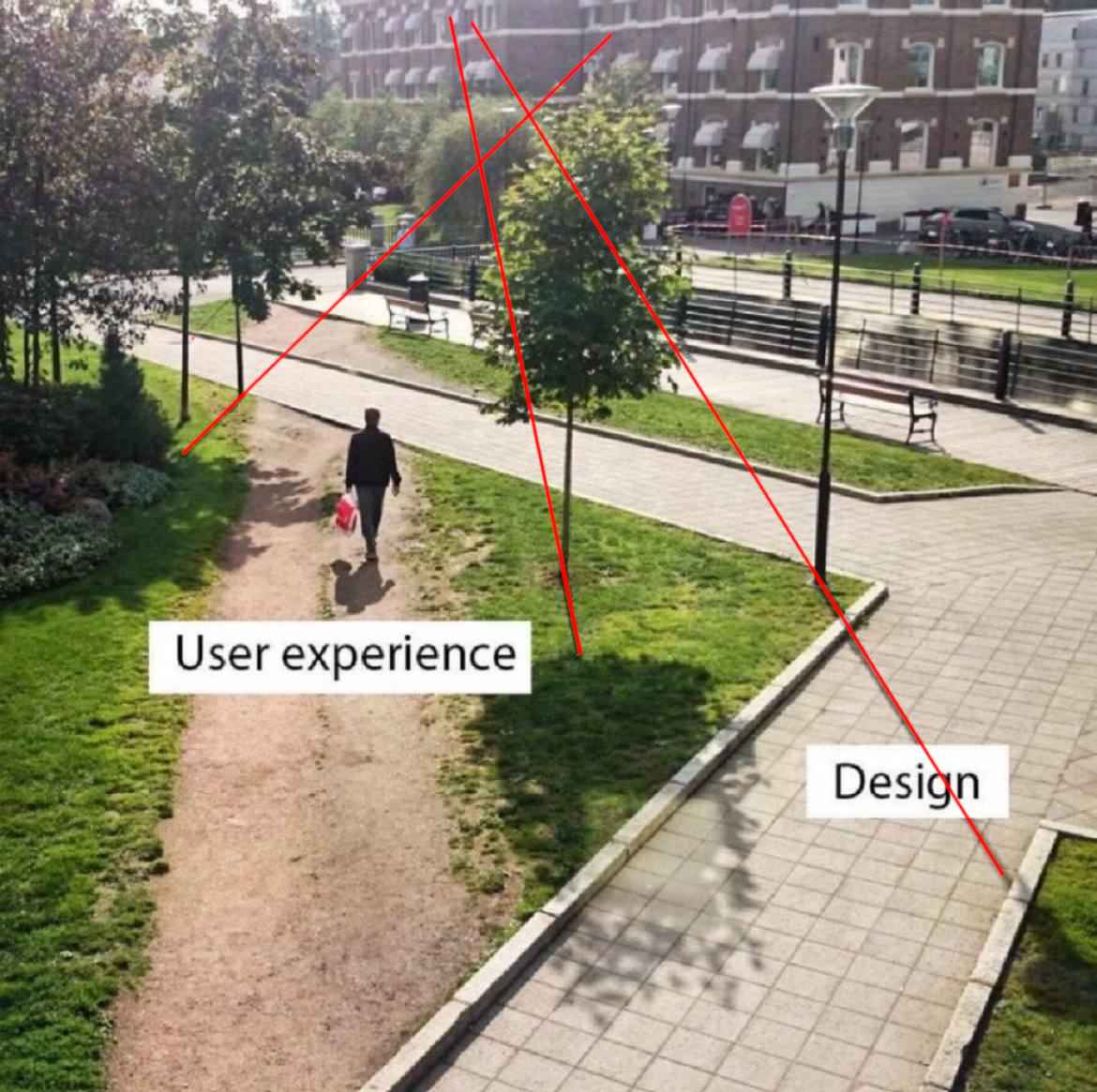
The lines of the tree trunk and lamppost shadows all converge toward where the sun is, if extended toward it.
I'm pretty sure that's not true
Edit: I'll concede the other points though
Your numbers are all over the place and don't really make sense for what you're talking about. 3 plus two groups of 6 would only be 15 out of 20, so where did the other 5 people go?
But more to the point, if those 3 stop pedaling, or pedal harder than everyone else combined, or apply the brakes, or tip the bike over, any number of other things they could absolutely change the speed/direction of the bike.
Polar Functions and dydx
We are interested in the lines tangent a given graph, regardless of whether that graph is produced by rectangular, parametric, or polar equations. In each of these contexts, the slope of the tangent line is dydx. Given r=f(θ), we are generally not concerned with r′=f′(θ); that describes how fast r changes with respect to θ. Instead, we will use x=f(θ)cosθ, y=f(θ)sinθ to compute dydx.
From the link above. I really don't understand why you seem to think a tangent line in polar coordinates would be a circle.
A straight line in polar coordinates with the same tangent would be a circle.
I'm not sure that's true. In non-euclidean geometry it might be, but aren't polar coordinates just an alternative way of expressing cartesian?
Looking at a libre textbook, it seems to be showing that a tangent line in polar coordinates is still a straight line, not a circle.
Sure, let's look at that lawsuit.
Steam Key Price Parity Provision. Valve nominally allows game publishers to make some limited third-party sales of Steam-enabled games through its “Steam Keys” program. Steam Keys are alphanumeric codes that can be submitted to the Steam Gaming Platform by gamers to access a digital copy of the purchased game within the Steam Gaming Platform, even when the game is not purchased through the Steam Store. Steam Keys can be sold by rival distributors including the Humble Store, Amazon, GameStop, and Green Man Gaming.
But Valve has rigged the Steam Keys program so that it serves as a tool to maintain Valve’s dominance. Among other things, Valve imposes a price parity rule (the “Steam Key PriceParity Provision”) on anyone wanting to sell Steam Keys through an alternative distributor. Put explicitly by Valve, “We want to avoid a situation where customers get a worse offer on the Steam store.” But that is equivalent to preventing gamers from obtaining a better offer from a competing distributor. The effect of this rule is to stifle price competition.
Because of this rule, Valve can stop competing game stores from offering consumers a lower price on Steam-enabled games in order to shift volume from the Steam Store to their storefronts. Even if a rival game store were to charge game publishers a lower commission than Valve’s high 30% fee, the distributor would not gain more sales because the game publishers could not charge a lower price in its store. Game publishers and consumers suffer because this rule keeps Valve’s high 30% commission from being subject to competitive pressure.
This Price Parity Provision is one of the reasons why Valve has been able to continue to charge an inflated 30% commission for many years, even as that commission is plainly above the levels that would prevail in a competitive market. Competition would normally force such an inflated commission to come down to competitive levels—but Valve’s restraints prevent those competitive forces from operating as they would in a free market.
Because of Valve’s restraint, publishers cannot utilize alternative distributors to avoid the 30% tax that Valve has set for the market. Thus, they reluctantly market their games primarily through the dominant Steam Store where Valve takes its 30% fee. While several distributors have tried to compete with Valve by charging lower commissions on Steam Keys, those efforts have largely failed to make a dent in the Steam Store’s market share because publishers using those distributors had to charge the same inflated prices they set on the Steam Store.
Moreover, even if a game publisher wanted to scale up its use of Steam Keys to promote competition, Valve has made it clear that it would shut down such efforts. When Valve recognizes that a game publisher is selling a significant volume of Steam Keys relative to its Steam Store sales, Valve can, at its own discretion, threaten the game publisher and refuse to provide more Steam Keys. Thus, Valve uses the Steam Key program as another tool to ensure that the vast majority of sales take place on the Steam Store, where Valve gets its 30% commission on nearly every sale.
So if you want to sell steam keys, you need to offer a similar deal on steam as you would wherever you're selling those steam keys. This doesn't apply to other storefronts like GOG, Epic, the Ubisoft store, the EA store or the Windows store, this is only about selling steam keys. So if you want to avoid giving Valve a cut of the sale while still using their platform to distribute your game, Valve is going to get upset and take action to prevent you from doing that.
There is also a section about
Price Veto Provision. Valve also requires game publishers to agree to give Valve veto power over their pricing in the Steam Store and across the market generally (the “Price Veto Provision”). Valve selectively enforces this provision to review pricing by game publishers on PC Desktop Games that have nothing to do with the Steam Gaming Platform at all. Through this conduct, prices set in the Steam Store serve as a benchmark that leads to inflated prices for virtually all PC Desktop Games.
which I think was the focus of a different lawsuit that mostly talked about a Most Favored Nation clause. This one is a little more complicated, but this lawsuit ended up getting dismissed. I'm not even close to being a lawyer so I don't know why exactly, but this video seems to make a pretty good argument for why this isn't a good legal argument. To summarize: there isn't actually any proof that this kind of clause is actually anti-competitive and violates anti-trust laws. There's also no telling whether or not other storefronts have similar conditions in place, because apparently these kind of Most Favored Nation clauses are fairly standard in some industries.
Also being realistic if Valve were to drop their cut to 20% game prices wouldn’t change, the publishers would just pocket the difference, as we have seen with Epic.
You can’t point to current publisher behavior on EGS, because their behavior at present is influenced by Valve’s price policy (called the “Platform Most Favored Nation” or “PMFN” clause in the court filing) which is the foundation of the anti-competitive case against Valve.
Looking at your other comment, I can say that Ubisoft tried ditching steam, but their prices didn't really change even though they were paying a lower commission to epic than they would have to valve. So they would have had the ability change their prices to whatever they wanted on the epic store without fear of valve vetoing the price, because those games weren't being sold on steam.
Steam clearly wins on features, the only metric to beat them on is price. Epic is trying to do so, but publishers are not actually lowering the cost on their platform because of Valve’s policies—policies which are only effective because a publisher cannot afford to be delisted from Steam due its large market share.
Is there any actual proof of this? Epic is well known for giving games away for free, the best price customers can hope for. Yet they still can't seem to retain a loyal customer base. Maybe the price isn't the most important factor for a digital distribution platform.
Why is buying less automatically better than recycling the mountain of stuff anyone uses to live?
Why is it better to make a smaller mountain of trash rather than figure out what to do with that trash?
The point is that dealing with trash takes time and energy, and if you want to be efficient about it you'd try to make as little trash as possible so you don't need to deal with it later. You might not see much of a benefit on an individual scale, but across an entire city it can make a huge difference.
If you're still not getting it, just compare the EPA's website for Reduce and Reuse versus Recycle
The most effective way to reduce waste is to not create it in the first place. Making a new product emits greenhouse gases that contribute to climate change and requires a lot of materials and energy - raw materials must be extracted from the earth, and the product must be fabricated then transported to wherever it will be sold. As a result, reduction and reuse are the most effective ways you can save natural resources, protect the environment and save money.
Recycling is the process of collecting and processing materials that would otherwise be thrown away as trash and turning them into new products. Recycling can benefit your community, the economy, and the environment. Products should only be recycled if they cannot be reduced or reused. EPA promotes the waste management hierarchy, which ranks various waste management strategies from most to least environmentally preferred. The hierarchy prioritizes source reduction and the reuse of waste materials over recycling.
It was determined the cost economically was far higher than the returns.
In the end the project ran for four years, concluding in 1979, but the data collection lasted for only two years and virtually no analysis was done by project staff. New governments at both federal and provincial levels reflected the changing intellectual and economic climate. Neither the Progressive Conservative government of Joe Clark in Ottawa nor Sterling Lyon’s Tories in Manitoba were interested in continuing the GAI experiments. The fate of the original data—boxes and boxes of paper files on families containing questionnaires related to all aspects of social and economic functioning—was unclear. They were stored in an unpublicized location by the Department of National Health and Welfare. In the end, only the Winnipeg sample, and only the labour market aspects of that sample, was ever made available. The Dauphin data, collected at great expense and some controversy from participants in the first large scale social experiment ever conducted in Canada, were never examined.
This study involved using one small town, Dauphin, as a a test for what happens when everyone in the population qualifies for the basic income. The study ran out of money long before the researchers originally thought it would, and the majority of the data wasn't analyzed until relatively recently.
The general result found in all the experiments was that secondary earners tended to take some part of the increased family income in the form of more time for household production, particularly staying home with newborns. Effectively, married women used the GAI to finance longer maternity leaves. Tertiary earners, largely adolescent males, reduced their hours of work dramatically, but the largest decreases occurred because they began to enter the workforce later. This delay in taking a first job at an older age suggests that some of these adolescent males might be spending more years in school. The biggest effects, that is, could be seen as either an economic cost in the form of work disincentives or an economic benefit in the form of human capital accumulation.
New mothers and teenagers weren't required to spend as much time working
Money flowed to Dauphin families from MINCOME between 1974 and 1978. During the experiment, Dauphin students in grade 11 seemed more likely to continue to grade 12 than their rural or urban counterparts, while both before and after the experiment they were less likely than their urban counterparts and not significantly more or less likely than their rural counterparts to complete highschool. Grade 11 enrolments as a percentage of the previous year grade 10 enrolments show a similar pattern.
Highschool graduation rates went up
Overall, the measured impact was larger than one might have expected when only about a third of families qualified for support at any one time and many of the supplements would have been small. ...At the very least, the suggestive finding that hospitalization rates among Dauphin subjects fell by 8.5 percent relative to the comparison group is worth examining more closely in an era characterized by concern about the increasing burden of health care costs. In 1978, Canada spent $7.5 billion on hospital costs; in 2010 it was estimated to have spent $55 billion—8.5 percent of which adds up to more than $4.6 billion. While we recognize that one must be careful in generalizing potential health system savings, particularly because we use hospitals differently today than we did in 1978, the potential saving in hospital costs associated with a GAI seems worthy of consideration.
And hospitalization rates went down. There were other effects, like small businesses opening during the period of MINCOME and shutting down after, a possible decline in women under 25 having children, but none of this was evaluated for whether it was worth the money or not.
I think the problem is mostly with how neo-liberals tend to try to balance the budget
ltxrtquq
joined 2 years ago
I think you're a little too focused on the one very specific way the bicycles were being unsafe in the video. Every example they listed was another way that cars are driven irresponsibly all the time, not just during a critical mass event where the point is to flood the streets with bicycles.