1
84
submitted 5 days ago* (last edited 5 days ago) by thelastaxolotl@hexbear.net to c/chapotraphouse@hexbear.net

Mao Zedong was born on 26 December 1893 in a middle peasant family in Shaoshan Valley, modern day Xiangtan County of Hunan Province, under the reign of Qing Dynasty Emperor Guangxu. From the age of six, Mao worked on his father's land and at a later age served as the family account keeper, performing farm work alongside the laborers hired by his father. Mao Zedong learned from his own experiences the hardships that the Peasantry suffered, as Mao Yinchang enforced a harsh work discipline on Mao Zedong and his younger brothers, even beating them. Such a life ingrained in Mao a rebellious spirit and good work discipline.

At the age of 17, filled with the need to continue his studies outside his secluded village and hearing that Dongshan School taught modern knowledge, Mao convinced family members to persuade his father to approve of the move. Leaving the environs of Shaoshan Valley for the first time.

On the eve of the 1911 Revolution, Changsha was a hub of the Province's revolutionary activity, with even the local military forces aligning with the revolutionaries. Changsha was Mao's, then 18, first encounter with revolutionary thought, becoming a dedicated reader of the revolutionary publication Minli bao (People’s Journal).

Mao immediately joined the revolutionary army of the new government, but rather than a student detachment, he opted to join the regular army. Becoming a private in the left platoon of the First Battalion, 25th Brigade, of the Hunan New Army. It was while reading an article in the Xianghan xinwen (Xianghan News), that Mao would first encounter the term 'socialism'.

After the revolution, during the New Culture Movement the New Youth magazine would criticize the then KMT goverment for its failures in abolishing the feudal istem throuth a materialist lents, a collegue friend introduced Mao to it. Eventually its makers would found the Communist party of China in Shanghai by Chen Duxiu and Li Dazhao in June 1921, And Mao was one of its early members

Following instructions from the Comintern members also joined the Kuomintang.

Mao worked as a Kuomintang political organizer in Shanghai. With the help of advisers from the Soviet Union the Kuomintang (Nationalist Party) gradually increased its power in China. Its leader, Sun Yat-sen died on 12th March 1925. When Chiang Kai-Shek emerged as the new leader of the Kuomintang after a power struggle between the right and left wing of the party, he carried out a purge (April 12 Purge) that seek to eliminate the communists from the organization and the country. The survivors of the purge managed to established diferent soviets inside the country the biggest being the Jiangxi Soviet.

The nationalists now imposed a blockade and Mao Zedong decided to evacuate the area and establish a new stronghold in the north-west of China. In October 1934 Mao, Lin Biao, Zhu De, and some 100,000 men and their dependents headed west through mountainous areas, this Began the Long March in which Mao would win the Political Power Struggle inside the CPC and become the Chairman of the CPC

The marchers covered about fifty miles a day and reached Shensi on 20th October 1935. It is estimated that only around 30,000 survived the 8,000-mile Long March.

During the Second World War Mao's well-organized guerrilla forces were well led by Zhu De and Lin Biao. As soon as the Japanese surrendered, Communist forces began a war against the Nationalists led by Chaing Kai-Shek. The communists gradually gained control of the country and on 1st October, 1949, Mao announced the establishment of People's Republic of China.

In 1958 Mao announced the Great Leap Forward, an attempt to increase agricultural and industrial production. This reform programme included the establishment of large agricultural communes containing as many as 75,000 people. The communes ran their own collective farms and factories. Each family received a share of the profits and also had a small private plot of land. However, three years of floods and bad harvests severely damaged levels of production. The scheme was also hurt by the decision of the Soviet Union to withdraw its large number of technical experts working in the country. In 1962 Mao's reform programme came to an end and the country resorted to a more traditional form of economic production.

As a result of the failure on the Great Leap Forward, Mao retired from the post of chairman of the People's Republic of China. His place as head of state was taken by Liu Shaoqi. Mao remained important in determining overall policy. In the early 1960s Mao became highly critical of the foreign policy of the Soviet Union. He was for example appalled by the way Nikita Khrushchev backed down over the Cuban Missile Crisis.

Mao became openly involved in politics in 1966 with the start of the Cultural Revolution.

During the early 1960s, Mao became concerned with the nature of post-1959 China. He saw that the old ruling elite was replaced by a new one. He was concerned that those in power were becoming estranged from the people they were to serve. In an attempt to dislodge those in power who favoured the Soviet model of communism, Mao told students and young workers as his Red Guards to fight the revisionists in the party.

Lin Biao compiled some of Mao's writings into the handbook, The Quotations of Chairman Mao, and arranged for a copy of what became known as the Little Red Book, to every Chinese citizen.

Zhou Enlai at first gave his support to the campaign but became concerned when fighting broke out between the Red Guards and their opposition. The Cultural Revolution came to an end when Liu Shaoqi resigned from all his posts on 13th October 1968. In 1969, Mao declared the Cultural Revolution to be over.

Mao gave his support to the Gang of Four: Jiang Qing (Mao's fourth wife), Wang Hongwen, Yao Wenyuan and Zhange Chungqiao.

Around the time of the death of Lin Biao in 1971, the Cultural Revolution began to lose momentum. The new commanders of the People's Liberation Army demanded that order be restored in light of the dangerous situation along the border with the Soviet Union.

Near the end of Mao's life, a power struggle occurred between the Gang of Four and the alliance of Deng Xiaoping, Zhou Enlai, and Ye Jianying.

Mao Zedong died in Beijing on 9th September, 1976.

Megathreads and spaces to hang out:

reminders:

  • 💚 You nerds can join specific comms to see posts about all sorts of topics
  • 💙 Hexbear’s algorithm prioritizes comments over upbears
  • 💜 Sorting by new you nerd
  • 🐶 Join the unofficial Hexbear-adjacent Mastodon instance toots.matapacos.dog

Links To Resources (Aid and Theory):

Aid:

Theory:

2
34
submitted 1 month ago* (last edited 1 month ago) by thelastaxolotl@hexbear.net to c/chapotraphouse@hexbear.net

The Golden Horde was the European appanage of the Mongol Empire (1206-1368 CE). Begun in earnest by Batu Khan in 1227 CE, the territory that would eventually become the Golden Horde came to encompass parts of Central Asia, much of Russia, and other parts of Eastern Europe. Later converting to Islam, the Golden Horde would meld aspects of cultures from Europe, Asia, and the Middle East while ruling Russia for over two centuries. At its height, Mongol raids from the Golden Horde extended from the Caucasus to Hungary to Constantinople, inspiring fear across the known the world of the fearsome Mongol horsemen, or, as they knew them, the Tartars.

They Came from the East

Under the leadership of Genghis Khan (r. 1206-1227 CE), the Mongol Empire began the greatest military machine of the medieval world. Expanding from Korea to the Caspian Sea under Genghis' reign, his sons and grandsons would bring the Mongol Empire to its heights, creating the largest contiguous land empire the world has ever seen.

According to Mongol tradition, Genghis divided his empire into appanages for each of his four sons. Genghis' first son, Jochi received the lands furthest from Mongolia, those around the Ural Mountains and beyond. It was to fall to Jochi's son, Batu Khan (r. 1227-1255 CE), to consolidate these future conquests and establish what would become known as the Golden Horde.

Ogedei Khan (r. 1229-1241 CE), Genghis' son and Batu's uncle, ordered a massive Mongol campaign east across the Ural Mountains to conquer Europe. In 1236 CE, the Mongol horde descended into the Volga River valley. Nothing to stand against Mongol warfare as the Volga Bulgars fell in 1237 CE, followed by the major Russian cities of Vladimir-Suzdal, Kiev, and Halych between 1238 and 1240 CE. Only the city of Novgorod, far to the north, escaped the Mongol onslaught.

The mongols sack suzdal

With Russia vanquished, the Mongol horde marched west. A three-prong attack led by Batu and the famous Mongol general Subotai devastated the Polish and Teutonic Knights at the Battle of Legnica in 1241 CE before the main army crushed the Hungarian army at the Battle of Mohi (aka the Battle of the Sajo River) later that year. Europe lay bare before the seemingly invincible Mongol horde, but the death of Ogedei back in Mongolia made the Mongols retreat and allowed Europe to breathe a sigh of relief. These first raids lead the Europeans to dub the Mongols Tartars, both from the name of a Mongol clan, the Tatars, and the fact that they seemingly came from the depths of hell, or Tartarus.

The Mongols would never venture as far as the Adriatic again, but the Golden Horde would remain a significant presence in Europe for the next two centuries. By playing the role of kingmaker following the death of Guyuk Khan in 1248 CE, Batu established the permanence of his family's rule over the Golden Horde portion of the Mongol Empire. Batu set up a capital at Sarai near the Volga and introduced a pattern of tribute from the Russian princes that would become a hallmark of the Golden Horde. In fact, one of the potential origins of the name “Golden Horde” is that the color derived from that of Batu's splendid golden tent. However, the color gold was associated with Genghis' family (called the “golden” family) and it was associated with the center in the Mongol's color system for cardinal directions, so those could also be potential origins.

Looking to the South

Batu's brother Berke (r. 1257-1266 CE) continued the precedent of Batu's robust leadership. He led campaigns into Poland, Lithuania, and Prussia, reinforcing the European fear of the Mongols. But perhaps the most important event of Berke's reign was his conversion to Islam.

The fact that Berke was a Muslim put him at odds with Hulegu Khan (r. 1256-1265), the leader of the Ilkhanate, which had conquered Iran and Iraq and had become one of the four main powers in the Mongol Empire. Hulegu had sacked the great Muslim city of Baghdad in 1258 CE and had killed the last Abbasid caliph by rolling him in a carpet and trampling him to death. The Golden Horde and the Ilkhanate also bordered each other in the Caucasus, which became a flashpoint. In 1262 CE, war broke out between the two nominal parts of the Mongol Empire. Berke formed an alliance with Baybars (r. 1260-1277 CE), the Mamluk Sultan in Egypt. An Ilkhanate invasion of the Golden Horde ended in defeat when the Golden Horde general Nogai led a surprise attack at the Battle of Terek in 1262 CE. At the same time as this Berke-Hulegu War, there was a civil war back in Mongolia over who would become Great Khan.

The Mongol Empire, although it would nominally remain united, was in reality shattered. In the coming decades, the Chaghataids would claim the rest of Transoxiana from the Golden Horde and Berke would die during a march against the Ilkhanate. Later in the 13th century CE, the Golden Horde would become involved in the conflict between Kublai Khan (r. 1260-1294 CE) and the Ogedeid leader Kaidu, supporting the latter. Internecine conflict with the Ilkhanate would continue as well.

Meanwhile, the Golden Horde became involved in the Balkans when a former Seljuk sultan was held captive by the Byzantine Empire. Nogai, with the help of the Golden Horde vassal Bulgaria, invaded the Byzantine Empire in 1271 CE and forced the emperor, Michael VIII Palaiologos (r. 1259-1281 CE) to marry one of his daughters to Nogai. The khan Mengu-Timur (r. 1266-1280 CE) opened the Golden Horde to trade, giving the Genoese and Venice trading colonies at Azov and Caffa, and ordering the Russians to allow German traders into their lands.

After Mengu-Timur's death, Nogai was the de facto ruler of the Golden Horde. He raided Europe from Lithuania to Bulgaria and forced Serbia to accept vassalage. While Nogai was a powerful warrior leader, his death in 1299 CE did not overly halt the campaigns of the Golden Horde.

The Triumph of Islam

The Golden Horde experienced many changes in the 14th century CE. For one, Islam came to stay. While Berke had been the first Mongol prince to convert to Islam, other rulers of the Golden Horde, including Toqta, continued to follow Tengrism (Mongol pagan beliefs) or Buddhism. That changed when Uzbeg (r. 1313-1341 CE) proclaimed Islam as the official religion of the Golden Horde. In this vein, Uzbeg continued to strengthen relations with the Mamluks of Egypt, even marrying a Mongol princess to the Egyptian sultan.

Instead of active military campaigns, Uzbeg and his successors kept the Russian princes subservient and divided by playing them against each other. Tver was the leading city backed by the Mongols, but when the city's population slaughtered their Mongol residents in 1327 CE, Uzbeg switched his support to the city of Moscow.

The 14th-century CE Decline

Yet the success of Uzbeg and Janibeg quickly unraveled. The Black Death had taken a serious economic toll on the Golden Horde. From 1359 to 1382 CE, the Golden Horde was wracked by civil war. During this time the Mongol grip on Eastern Europe also began to slacken. In fact, the Mongols faced their first serious defeats in Europe during this time. Lithuania defeated the Mongols at the Battle of Blue Waters in 1362 CE, following up the battle by conquering Kiev. The Russian principalities scored their first victory over the Mongols in 1380 CE at the Battle of Kulikovo, which is considered a turning point in Russian history.

Under Uzbeg, the Golden Horde remained active. Toqta (r. 1291-1312 CE) married an illegitimate Byzantine princess, strengthening the Golden Horde-Byzantine alliance that had existed since the time of Nogai. Yet under Uzbeg, the Mongols, in alliance with their Bulgarian vassal, raided the Byzantine Empire for two decades. They also propped up an independent Wallachia against Hungary. Meanwhile, Uzbeg opened up the Crimea to trading posts by the Genoese and Venetians. The 1340s CE featured the last Mongol campaigns into Poland.

The 14th-century CE Decline

Yet the success of Uzbeg and Janibeg quickly unraveled. The Black Death had taken a serious economic toll on the Golden Horde. From 1359 to 1382 CE, the Golden Horde was wracked by civil war. During this time the Mongol grip on Eastern Europe also began to slacken. In fact, the Mongols faced their first serious defeats in Europe during this time. Lithuania defeated the Mongols at the Battle of Blue Waters in 1362 CE, following up the battle by conquering Kiev. The Russian principalities scored their first victory over the Mongols in 1380 CE at the Battle of Kulikovo, which is considered a turning point in Russian history.

Revival Under Tokhtamysh

The decline of the Golden Horde was briefly arrested by Tokhtamysh, a protegee of Tamerlane (r. 1380-1395 CE). Tokhtamysh besieged Moscow in 1382 CE and, ignoring a promise to not attack the city, slaughtered the inhabitants when the city opened its gates. The next year Tokhtamysh avenged the loss at the Battle of Blue Waters by defeating the Lithuanians at the Battle of Poltava. Both the Russians and Lithuanians were back under the Mongol yoke and forced to pay tribute.

But Tokhtamysh's successes made him overreach himself. He next decided to turn on his mentor Tamerlane. Tamerlane's vengeful campaign sacked Sarai, burned the Golden Horde's land, destroyed its army, and forced Tokhtamysh to flee. Tokhtamysh fled to Lithuania and later tried and failed to retake the Golden Horde. Meanwhile, Tamerlane had so devastated the trade routes in the Golden Horde that the state would never recover economically.

Russia Resurgent

After Tamerlane's destruction and the civil wars that followed, the Golden Horde was increasingly limited to the lower banks of the Volga River. The Golden Horde broke up into several separate khanates: the Khanate of Khazan, the Khanate of Astrakhan, the Khanate of the Crimea, the Khanate of Sibir, the Nogai Horde, and the Kazakh Khanate. The last major khan of the Golden Horde, Ahmed (r. 1465-1481 CE), led a campaign against Lithuania and Moldavia that ended in defeat.

Perhaps more importantly for history, Ahmed also led the Mongols during the Battle of the Ugra River in 1480 CE. Ivan III of Moscow soundly defeated the forces of the Golden Horde and the battle has ever since been recognized as the end of the Mongol domination of Russia.

reminders:

  • 💚 You nerds can join specific comms to see posts about all sorts of topics
  • 💙 Hexbear’s algorithm prioritizes comments over upbears
  • 💜 Sorting by new you nerd
  • 🐶 Join the unofficial Hexbear-adjacent Mastodon instance toots.matapacos.dog

Links To Resources (Aid and Theory):

Aid:

Theory:

3
30

Tsukuyomi-no-Mikoto (ツクヨミノミコト, 月読命), or simply Tsukuyomi (ツクヨミ, 月読) or Tsukiyomi (ツキヨミ), is the moon kami in Japanese mythology and the Shinto religion. The name "Tsukuyomi" is a compound of the Old Japanese words tsuku (月; "moon, month", becoming modern Japanese tsuki) and yomi (読み; "reading, counting"). The Nihon Shoki mentions this name spelled as Tsukuyumi (月弓; "moon bow"), but this yumi is likely a variation in pronunciation of yomi. An alternative interpretation is that his name is a combination of tsukiyo (月夜; "moonlit night") and mi (見; "looking, watching"). -no-Mikoto is a common honorific appended to the names of Kami; it may be understood as similar to the English honorific 'the Great'.

In Man'yōshū, Tsukuyomi's name is sometimes rendered as Tsukuyomi Otoko (月讀壮士; "moon-reading man"), implying that he is male

Myth

Tsukuyomi was the second of the "three noble children" (三貴子, Mihashira-no-Uzu-no-Miko) born when Izanagi-no-Mikoto, the kami who created the first land of Onogoroshima, was cleansing himself of his kegare while bathing after escaping the underworld and the clutches of his enraged dead sister, Izanami-no-Mikoto. Tsukuyomi was born when he washed out of Izanagi's right eye. However, in an alternative story, Tsukuyomi was born from a mirror made of white copper in Izanagi's right hand.

Tsukuyomi angered Amaterasu (who in some sources was his wife) when he killed Ukemochi, the megami of food. Amaterasu once sent Tsukuyomi to represent her at a feast presented by Ukemochi. The megami created the food by turning to the ocean and spitting out a fish, then facing a forest and spitting out game, and finally turning to a rice paddy and coughing up a bowl of rice. Tsukuyomi was utterly disgusted by the manner of which the exquisite-looking meal was made in, so he killed her.

Amaterasu learned what happened and she was so angry that she refused to ever look at Tsukuyomi again, forever moving to another part of the sky. This is the reason that day and night are never together. This is according to one of the accounts in the Nihon Shoki. Tsukuyomi does not have such significance in the Kojiki, in which there is a similar tale about Susanoo-no-Mikoto killing a similar food megami named Ōgetsuhime, who is often conflated with Ukemochi.

reminders:

  • 💚 You nerds can join specific comms to see posts about all sorts of topics
  • 💙 Hexbear’s algorithm prioritizes comments over upbears
  • 💜 Sorting by new you nerd
  • 🐶 Join the unofficial Hexbear-adjacent Mastodon instance toots.matapacos.dog

Links To Resources (Aid and Theory):

Aid:

Theory:

4
56

the Cork Transport Workers' Union took possession of the Harbour Board's offices and assumed complete control of the local port, forming a workers' soviet until negotiations could be resolved.

The Cork Harbour Strike was a labor dispute that lasted from September 2nd to September 7th, 1921. It was the result of the refusal of the Cork Harbor Board to increase the wages of its workers to a minimum of 70s a week.

On September 6th, 1921, the Cork Transport Workers' Union took possession of the Harbour Board's offices and assumed complete control of the port.

According to the New York Times, "when the strikers took possession of the Harbour Board offices, they hoisted a red flag as a token of Soviet control and the strikers' leaders announced their intention of collecting dues from shipping agents and using them to pay members of the union."

The rebellion was short-lived, however, as negotiations between the Harbour Board and the strikers were reopened soon after, which came to a successful resolution. The revolt was not well-taken in the press.

The Irish Times wrote "To-day Irish Labour is permeated with a spirit of revolt against all the principles and conventions of ordered society. The country's lawless state in recent months is partly responsible for this sinister development, and the wild teachings of the Russian Revolution have fallen on willing ears."

The Cork harbour strike of 1921 libcom trouble

reminders:

  • 💚 You nerds can join specific comms to see posts about all sorts of topics
  • 💙 Hexbear’s algorithm prioritizes comments over upbears
  • 💜 Sorting by new you nerd
  • 🐶 Join the unofficial Hexbear-adjacent Mastodon instance toots.matapacos.dog

Links To Resources (Aid and Theory):

Aid:

Theory:

5
103

I am Aya Muhammad from Gaza and this is my story. I hope you will work to support and help me, my friends. Thank you from the bottom of my heart for standing by us in light of these difficult circumst https://gofund.me/1222af19

6
158
submitted 1 year ago* (last edited 1 year ago) by WhyEssEff@hexbear.net to c/chapotraphouse@hexbear.net

A complete^[I think? emilie-shrug] guide to Lemmy's supported markdown formatting.


Heading 1 # Heading 1

Heading 2 ## Heading 2

Heading 3 ### Heading 3

Heading 4 #### Heading 4

Heading 5 ##### Heading 5
Heading 6 ###### Heading 6

Bold text using **Bold text** or __Bold text__

Italic text using *Italic text* or _Italic text_

Bold and italic text using ***Bold and italic text***

~~Strikethrough text~~ using ~~Strikethrough text~~^[whoops phoenix-bashful]


This is a blockquote using > This is a blockquote

Nested blockquote using >> Nested blockquote


  • Unordered list item using - Unordered list item
  • Another item using - Another item
  1. Ordered list item using 1. Ordered list item
  2. Another ordered item using 2. Another ordered item

Inline code using `Inline code`

Unspecified code block:

#include <stdio.h>

int main() {
    int x = 10;
    if (x > 5) {
        printf("This is a test!\n");
    }
    return 0;
}

// **Wow! How neat!**

Using ``` \n code \n ```

C code block:

#include <stdio.h>

int main() {
    int x = 10;
    if (x > 5) {
        printf("This is a test!\n");
    }
    return 0;
}

// **Wow! How neat!**

Using ```c \n code \n ```

Same, but designated as markdown code block:

#include <stdio.h>

int main() {
    int x = 10;
    if (x > 5) {
        printf("This is a test!\n");
    }
    return 0;
}

// **Wow! How neat!**

Using ```markdown \n code \n ```


This is a link using [This is a link](https://hexbear.net/c/main)

This is an image: ![](https://hexbear.net/pictrs/image/456a406f-0cbc-4a0b-8062-d89a078ff465.png)

This is an emote: this-is-not-an-emote using ![this-is-not-an-emote](https://hexbear.net/pictrs/image/315ad77c-a156-42c9-aa92-ee4e724e241a.png "emoji this-is-not-an-emote")

Quotations after second part of links/images are alt-text, which appear when moused over and help w/rt screen readers.


Footnote reference[^3][^3]

[^3]: Footnote definition using [^3]: Footnote definition

Inline footnote^[citation needed]^[citations-needed with Adam Johnson and Nima Shirazi]


This is
how to
make tables
| This | is |
|-|---|
| how | to
| make | tables |

~Sub~script using ~Sub~script

^Super^script using ^Super^script


{text|ruby} using {text|ruby}


spoilerThis is hidden content using
spoiler spoiler \nThis is hidden content\n::: :::


Horizontal rule using ---, ***, or ___:


Two spaces and a newline \n
to single-space your text

Otherwise
it looks like:

Otherwise it looks like


If you know anything else that works, let me know and I'll add it. Asked too many times to not try and compile a reference for people, and I sometimes forget myself so it's nice to have the reference. Here are the footnotes, by the way!
hello footnotes! kirby-wave^[hello! koishi-wave]

7
90

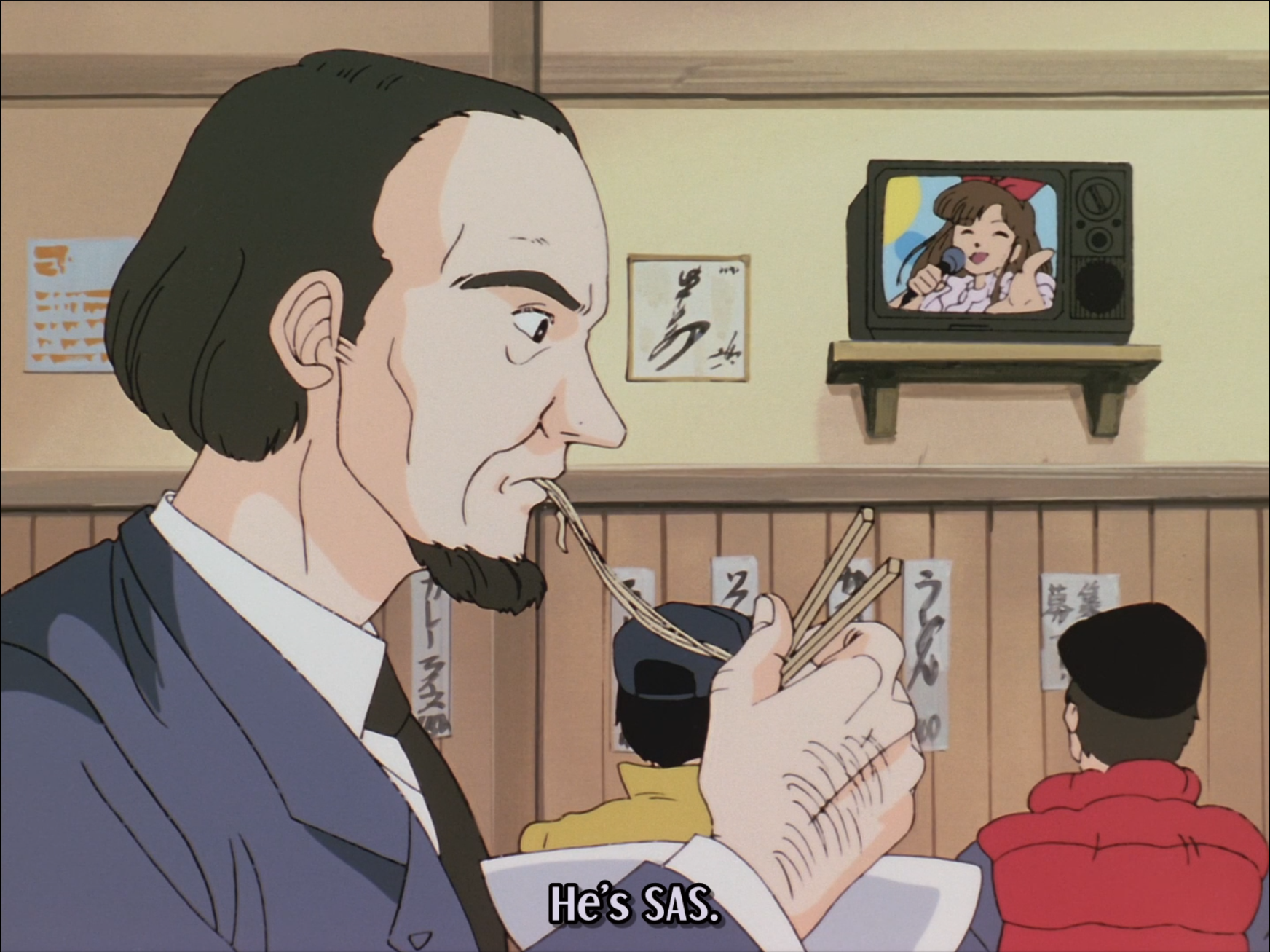
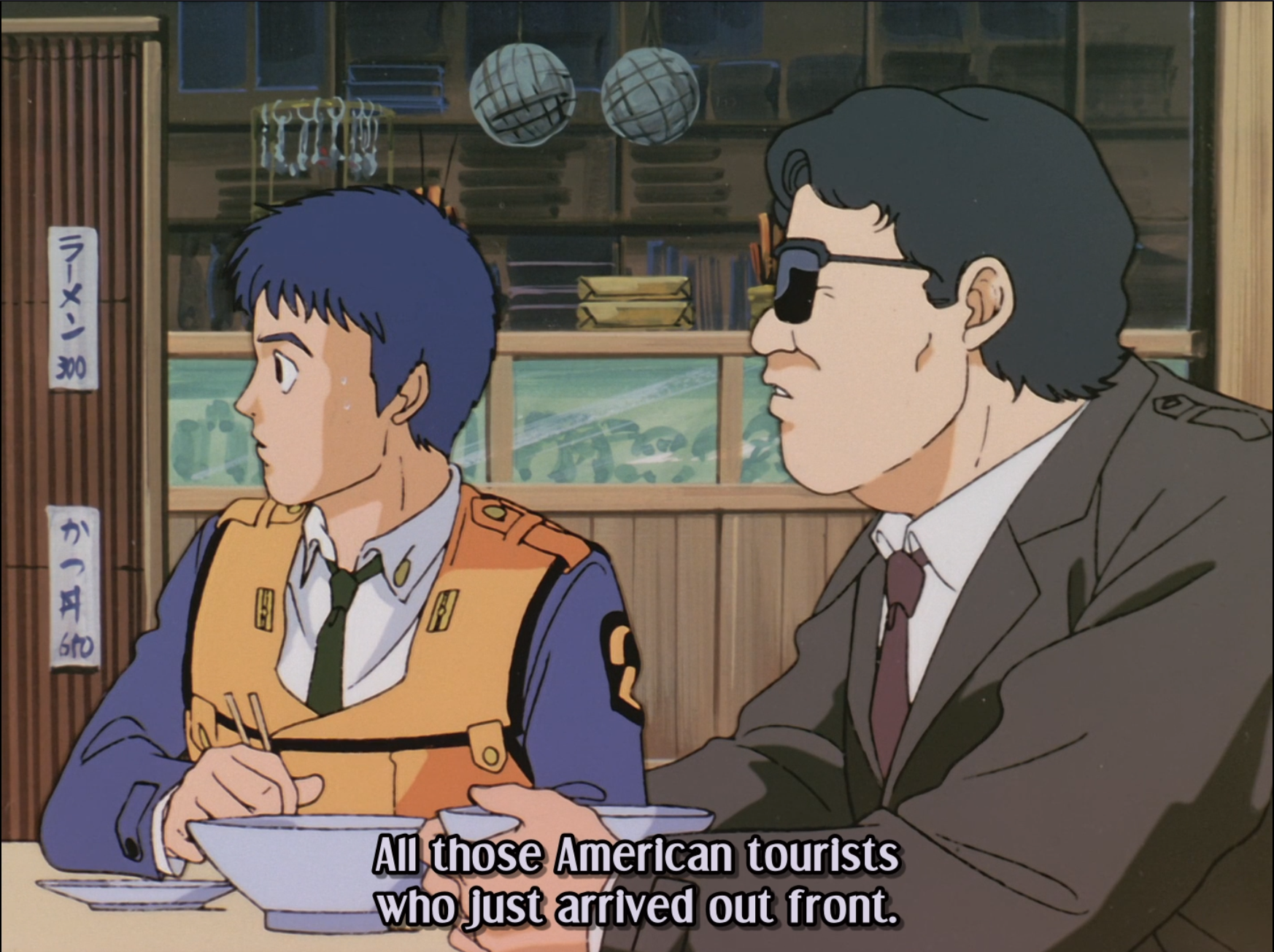
cross-posted from: https://hexbear.net/post/3150237

Screens from Patlabor on TV

fedpostingpete-eatfunny-clown-hammer

8
163
submitted 2 years ago* (last edited 2 years ago) by BeamBrain@hexbear.net to c/chapotraphouse@hexbear.net

This is on my mind, since I had to temp-ban someone from c/vegan for it in the past week, and another example of it went unmoderated for hours after being reported in another community (though it was eventually dealt with).

It doesn't matter how much the person you're responding to deserves it. Odds are, they will not care. But you know who will care? Any comrades who happen to read the thread and who struggle with suicidal ideation and/or self harm. You could ruin their day. You could be the push that sends them over the edge. Even in the unlikely event that you cause grief to the person you're responding to, no amount of collateral damage is worth it.

Don't make suicide bait posts or comments. Don't upvote suicide bait posts or comments. Report and denounce them wherever they show up.

9
139
submitted 2 years ago* (last edited 1 week ago) by thelastaxolotl@hexbear.net to c/chapotraphouse@hexbear.net

!main@hexbear.net

!podcasts@hexbear.net

!askchapo@hexbear.net

!news@hexbear.net

!technology@hexbear.net

!history@hexbear.net

!politics@hexbear.net

!announcements@hexbear.net

!commrequest@hexbear.net

!games@hexbear.net

!transenby_liberation@hexbear.net

!literature@hexbear.net

!art@hexbear.net

!electoralism@hexbear.net

!feedback@hexbear.net

!music@hexbear.net

!philosophy@hexbear.net

!em_poc@hexbear.net

!anti_cishet_aktion@hexbear.net

!womenby@hexbear.net

!anime@hexbear.net

!science@hexbear.net

!movies@hexbear.net

!food@hexbear.net

!guns@hexbear.net

!the_dunk_tank@hexbear.net

!gardening@hexbear.net

!sports@hexbear.net

!anarchism@hexbear.net

!europe@hexbear.net

!marxism@hexbear.net

!videos@hexbear.net

!tactics@hexbear.net

!urbanism@hexbear.net

!mutual_aid@hexbear.net

!menby@hexbear.net

!latam@hexbear.net

!sino@hexbear.net

!antifascism@hexbear.net

!vegan@hexbear.net

!writing@hexbear.net

!islam@hexbear.net

!creepy@hexbear.net

!diy@hexbear.net

!ama@hexbear.net

!memes@hexbear.net

!judaism@hexbear.net

!hexbear@hexbear.net

!christianity@hexbear.net

!languagelearning@hexbear.net

!fitness@hexbear.net

!copypasta@hexbear.net

!bloomer@hexbear.net

!oceania@hexbear.net

!canada@hexbear.net

!earth@hexbear.net

!chapotraphouse@hexbear.net

!neurodiverse@hexbear.net

!finance@hexbear.net

!agitprop@hexbear.net

!paganism@hexbear.net

!libre@hexbear.net

!shrekland@hexbear.net

!emoji@hexbear.net

!chat@hexbear.net

!effort@hexbear.net

!labour@hexbear.net

!cars@hexbear.net

!worldbuilding@hexbear.net

!poverty_finance@hexbear.net

!acab@hexbear.net

!covid@hexbear.net

!doomer@hexbear.net

!ttrpg@hexbear.net

!parenting@hexbear.net

!chicago@hexbear.net

!chapotraphouse3@hexbear.net

!maritime@hexbear.net

!indigenous@hexbear.net

!fediverse@hexbear.net

!gamedev@hexbear.net

!mycology@hexbear.net

!hobby@hexbear.net

!travel@hexbear.net

!fashion@hexbear.net

!fakenews@hexbear.net

!tabletop@hexbear.net

!librehab@hexbear.net

!theory@hexbear.net

!agriculture@hexbear.net

!traaaaaaannnnnnnnnns@hexbear.net

!howdy@hexbear.net

!bestofhexbear@hexbear.net

!den@hexbear.net

!traa@hexbear.net

!taylorswift@hexbear.net

!comics@hexbear.net

!pets@hexbear.net

!badposting@hexbear.net

!polyamory@hexbear.net

!maps@hexbear.net

!furry@hexbear.net

!soviet@hexbear.net

!programming@hexbear.net

!self_improvement@hexbear.net

!drugs@hexbear.net

!dredge_tank@hexbear.net

!nonbinary@hexbear.net

!internationale@hexbear.net

!disabled@hexbear.net

!gossip@hexbear.net

!counterpropaganda@hexbear.net

!selfcrit@hexbear.net

!left_tok@hexbear.net

!slop@hexbear.net

!bureaucracy@hexbear.net

!cute@hexbear.net

!book_requests@hexbear.net

!degrassi@hexbear.net

!wrestling@hexbear.net

!trans_synths@hexbear.net

!mathematics@hexbear.net

!popularculture@hexbear.net

!atheism@hexbear.net

10
155
submitted 2 years ago* (last edited 2 years ago) by cricbuzz@hexbear.net to c/chapotraphouse@hexbear.net

Wanted to get a thread together to highlight aid groups that can be donated to to help Palestinian aid

~~That's the only one I know of but leaning on y'all for help to spread the word. Lots of medical aid needed so let's direct our energy toward those helping in Gaza~~

Keep em coming and I'll try to continue to add them here

11
89

Lookin for it?

Leave

hentai-free

12
24

dafoe-horror

13
9
14
12

yeah im willing to throw out the baby with the bathwater when the baby is a nazi who poisons all the water it touches. easy decison tbh

15
18
submitted 5 hours ago* (last edited 5 hours ago) by Lemmygradwontallowme@hexbear.net to c/chapotraphouse@hexbear.net

https://archive.is/bUAAc

from r/urbanhellcirclejerk, a subreddit mocking anti-China r/urbanhell

16
30
17
37

"Why don't you break up with them then?"

"WHAT?!?!?!?!?!?!"

18
35
Assessing Chomsky (orinocotribune.com)

cross-posted from: https://news.abolish.capital/post/16250

By Joe Emersberger – Dec 23, 2025

From bad ideology to disgrace

I discovered Noam Chomsky’s books when I was in my twenties (during the late 1980s) and deeply admired him for decades. The only intellectual I ever admired more than Chomsky was Bertrand Russell, who I discovered at a much younger and more impressionable age.

During the early 2000s, the internet was a shiny new thing, and I was thrilled to join the Znet Sustainer Forum. Forum members could interact directly with Chomsky and other leftist writers. It was one of the many ways Chomsky propped up alternative media, something he had done for decades. Before the internet, Z Magazine was one of the places where I found relief from the suffocating reactionary conformity of the corporate media. Sunday morning political talk shows were especially soul-crushing to watch. Every month I’d look forward to getting Z Magazine in the mail so I could 1) confirm that I wasn’t crazy for being disgusted with establishment news media 2) arm myself with facts and arguments. Needless to say, any alternative news magazine or radio show at the time that featured a contribution by Chomsky would get a big boost.

I noticed that, unlike some writers in the Znet forum, Chomsky did not come off as an arrogant jerk. He was very approachable and generous with his time. Years later, I began interacting with him directly by email and, until about 2011, always agreed with his replies. Later, when we disagreed I never felt belittled or disrespected by him. On the contrary, he was very encouraging of my writing. I should note that a few of Chomsky’s friends, Ed Herman and John Pilger, with whom I never became disillusioned, were similarly pleasant and generous in responding to writers like me who had nothing approaching their stature.

Early warning signs: Haiti
During my time in the Znet forum in the early 2000s I recall Chomsky making a few negative remarks about former Haitian president Jean Bertrand Aristide while Aristide was serving his second term in office.

Aristide’s first term was cut short in 1991 by a U.S.-backed military coup that Chomsky very strongly denounced. Bill Clinton, who Chomsky once referred to in the Znet forum as a “thug”, allowed Aristide to return to Haiti in 1994. Chomsky was scathing in describing the outrageous concessions Clinton had wrung from Aristide: forcing Aristide to accept impunity for the military that had spent three years murdering thousands of his supporters, forcing Aristide to accept that his three years in exile count as time served in office, and forcing Aristide to adopt neoliberal economic policies that were the opposite of Aristide’s winning campaign platform in 1990.

After returning to Haiti in 1994, to a significant extent, Aristide flouted the agreement Clinton imposed on him. Murderers from military junta were prosecuted and the Haitian military abolished. Aristide’s close ally Rene Preval completed a full term as president, then Aristide was elected again in 2000. That same year Aristide’s political allies won a resounding victory in legislative elections.

A U.S.-led vilification campaign against Aristide immediately went into action. Aristide was accused of rigging the elections of 2000 and of arming his supporters to terrorize his opponents. These bogus allegations were repeated not just by the U.S. government and western media but by prominent NGOs like Human Rights Watch, Amnesty International, Christian Aid and Reporters without Borders.

On February 29, 2004 US troops kidnapped Aristide and flew him out of Haiti. He ended up exiled in South Africa for several years as the US made it clear it strongly opposed his return to Haiti. Influenced by Chomsky, and all the NGOs listed above, I had believed there must be significant truth to the allegations against Aristide. Then the 2004 coup happened and I started to doubt what I had casually accepted. The more closely I looked into the allegations, the more I realized they were totally false. Independent researchers Yves Engler and Anthony Fenton quickly produced a short but very effective book that debunked the lies that had facilitated the coup. A few years later, in 2010, Peter Hallward wrote an even more thorough debunking in his book “Damming the Flood: Haiti, Aristide, and the Politics of Containment”. A blurb from Chomsky on the front cover reads “very convincing, a marvellous book”. I totally agree. I thought Chomsky had learned important lessons from the 2004 coup, as I had. I was wrong.

In 2012, when I asked Chomsky if he would add his name to a letter defending Aristide from persecution, he declined. Chomsky said the activists he consulted on Haiti were “uneasy with the depiction of Aristide”. Admittedly, though I agreed to sign, I also had some issues with the letter, but not that it was too flattering of Aristide. After everything that had been done to Haiti and to Aristide since 2004, how could that possibly have been a concern?

I continued admiring Chomsky but concluded he had significant blind spots due to his anarchist ideology. Any government, even one as weak and minimalist as Aristide’s, would always be viewed with suspicion by Chomsky. His fierce denunciations of the US would often be undermined by unfair criticism of governments under U.S. attack. This defect in Chomsky’s thinking was exacerbated by his free speech absolutism.

Nicaragua, Venezuela, free speech absolutismelite impunity
In his 1989 book Necessary Illusions, Chomsky did a wonderful job documenting the grim details of Ronald Reagan’s terrorist war on Nicaragua. Chomsky described the U.S.-backed Nicaraguan newspaper La Prensa as a propaganda tool of the U.S. as it attacked Nicaragua. He said La Prensa “barely pretended to be a newspaper”. Nevertheless Chomsky insisted that the Nicaraguan government let La Prensa stay open: “Advocates of libertarian values should, nonetheless, insist that Nicaragua break precedent in this area, despite its dire straits…”. In his 1988 book “The Culture of Terrorism” Chomsky also wrote that if “true internal freedom were permitted in Nicaragua, as surely it should be” then its government would bear the huge “burden” of a media terrain dominated by its US-backed enemies, but “none of this implies that the burden should not be borne”.

I’m embarrassed that it took me years to realize what toxic nonsense Chomsky had advocated. La Prensa was helping US-backed terrorists kill Nicaraguans. Chomsky’s free speech absolutism is contradictory and reactionary. Insisting on impunity for La Prensa required ignoring the voices of Nicaraguans that the newspaper silenced forever by getting them killed. Jump ahead to 2021 and La Prensa was still a mouthpiece for US-backed subversives, and Chomsky signed aletter that essentially called on Nicaragua to capitulate to those subversives. The letter also had the audacity to refer to the 1990 election, won by the US-backed candidate thanks to the terrorist war waged on the country, as “free and fair”.

Chomsky’s opposition to libel laws similarly amounts to supporting impunity for the most dangerous (I.e. wealthiest) liars who silence people by using speech to get them killed, driven into hiding, or brought to financial ruin.

In 2007, Venezuela’s government under Hugo Chavez refused to renew the broadcast license of a TV network, RCTV, that had supported a U.S.-backed coup that had succeeded in ousting Chavez for two days in 2002. Chomsky objected to the non-renewal calling it a “tactical mistake”. Remember that at this point, Venezuela had not even shut down RCTV. It was still able to broadcast via satellite,

A reasonable criticism was the opposite of Chomsky’s – that it was a “tactical mistake” on Venezuela’s part not to immediately (not years later) shut down all the TV networks(not just RCTV) that had backed the 2002 coup. However, a concern for any government (unless it is as strong as China or Russia) is western public opinion, especially the opinion of “progressive” elements in the west who might oppose US aggression. A government like Venezuela’s cannot be completely indifferent to how it’s portrayed in the West. Chomsky’s role has been to encourage governments under U.S. attack to be suicidally weak or else face harsh attack from the western left.

In 2011, Chomsky invoked judicial independence and humanitarian grounds to support Venezuelan judge Lourdes Afiuni. She was jailed after letting a businessman who had been jailed for corruption escape Venezuela. Chomsky’s insistence on Venezuela letting a corrupt judge walk did not stop him from, years later, blasting Venezuela’s government for, as he put it “allowing virtually free rein to capital for enrichment”.

On Venezuela, it appears the most reactionary voices ultimately swayed Chomsky the most. During one email exchange with Chomsky, I was shocked that he suggested Boris Muñoz to me as a credible source on Venezuela. In a 2012 article, Muñoz spread a claim that Hugo Chavez’s cancer was a hoax “orchestrated in complicity with the government of Havana”. I explained to Chomsky how damning that was of Muñoz, but I don’t think it sunk in.

At home, Chomsky was similarly contradictory: denouncing elite savagery while also opposing the mildest punishment for the elite. In 1969 Chomsky was so disgusted by glorification of the Vietnam war that he wrote in his book American Power and the New Mandarins “We have to ask ourselves whether what is needed in the United States is dissent – or denazification.”

But in 1969, Chomsky also told MIT that he vehemently opposed Walt Rostow being denied a teaching position. Rostow returned to academia in 1969 after working as National Security Advisor for Presidents Kennedy and Johnson. Chomsky recalled his actions to a sympathetic biographer (Robert Barsky) as follows:

I went to see the President of MIT in 1969 to inform him that we intended to protest publicly if there turned out to be any truth to the rumors then circulating that Walt Rostow (who we regarded as a war criminal) was being denied a position at MIT on political grounds (claims that were hardly plausible and turned out to be utterly false).

In one interview Chomsky said he might have resigned from MIT had Rostow been denied a job. So despite US savagery that prompted Chomsky to call for denazification of the US, he strongly objected to top US Nazis suffering career consequences for their crimes.

Libya, Syria, Ukraine: Chomsky gets worse
In 2011, Chomsky supported the UN Security Council resolution that imposed a no fly zone on Libya but then objected that the resolution was violated by NATO to overthrow Gaddafi’s government. So he objected to the most predictable thing happening as he should have known from his own extensive writing on western duplicity and criminality. Nevertheless he said it would be “rash” to predict the consequences of Gaddafi’s ouster. In fact, Gaddafi’s ouster very predictably led to an ongoing nightmare that western media easily swept under the rug..

In Syria, Obama initiated US support for a dirty war to oust the Assad government that, long after Obama left office, yielded a big victory for the U.S. and Nazi Israel. An Al-Qaada terrorist (who is also a former high ranking member of ISIS) is now the dictator of Syria. In 2016, Chomsky said he didn’t know how Obama’s actions in Syria could have been any better:

And for Syria, … it’s just very hard to think of any recommendations. I mean, I don’t know what Obama could’ve done that’s better [than] what he did do

In 2018 Chomsky signed a letter with numerous other western intellectuals (David Graeber, Judith Butler, David Harvey et al) that called on the US military to bomb Syria in defence of Kurdish anarchists that the authors claimed were the USA’s “leading allies against ISIS in Syria”. The idea that the U.S. was in Syria to fight ISIS was worthy of a rightwing neocon.

It is amazing how controversial it became among western leftists – thanks in no small part to Chomsky’s destructive influence- to defend Assad’s government against what was obviously a joint U.S. and Israeli supported effort to overthrow it.

Today, the situation in Syria is complex as Vanessa Beeley explains. But it’s a chaotic horror show characterized by partition, plunder, and sectarian atrocities that benefits “Israel”.

Chomsky would hit new lows after Russia invaded Ukraine. In a 2022 interview, Chomsky gushed about the “great courage” and “great integrity” of Ukrainian President Zelensky who he called “an honourable person”. Remember that Chomsky could not bring himself to sign a letter defending Aristide in 2012 because he didn’t want to be overly positive about the former Haitian president who was twice overthrown by the U.S. But Zelensky – head of the notoriously corrupt U.S.-backed government that honours Nazi collaborator Stefan Bandera – Chomsky showered with praise.

Chomsky’s Sneaky Zionism
On Palestine, Chomsky’s approach was to win many decent people over with his very detailed analysis of Israeli crimes, but underneath the copious documentation and indignation his position remained Zionist. In a 2014 article for The Nation he advocated the two state delusion, and arrogantly warned Palestinians against pressing for more – even the right of refugees to return to the lands from which they were expelled.

In 2004 Chomsky talked about “the destruction of Israel” like that would be a bad thing:

The call for a “democratic secular state,” which is not taken seriously by the Israeli public or internationally, is an explicit demand for the destruction of Israel, offering nothing to Israelis beyond the hope of a degree of freedom in an eventual Palestinian state.

Given the live-streamed Holocaust in Gaza we’ve been witnessing since Oct 7, 2023 the Zionist nature of Chomsky’s approach has never been so thoroughly discredited. Nazi Israel must be overthrown. Period.

Anti-Stalinism: the original sin of western leftists
It wasn’t until 2023, a few months before the genocide got underway in Gaza that I was willing to say that I no longer respected Chomsky. It took me way too long. Why?

Part of the reason is anti-Marxism. Both Bertrand Russell and Noam Chomsky, the biggest influences on me intellectually for decades, were dismissive of Karl Marx. See this piece by Roderic Day for examples of Chomsky’s dismissiveness towards Marx. It was not until I shrugged off their influence on me that I could undertake a proper study of Marx. It is no accident that prominent western intellectuals tend to be either anti-Marxist or promote a version of Marxism that is compatible with western imperialism. See Gabriel Rockhill’s discussions about that with Nick Estes and Justin Podur. The liberal faction of the western elite has put way more effort than I ever imagined into developing a “compatible left”. Bertrand Russell was part of a CIA-funded anti-Communist front group.

But many of the Marxists I’ve met in my life were also anti-Stalin because they uncritically followed the line the USSR took after Stalin died. I swallowed a consensus that almost everyone from Marxists to every kind of anti-Marxist seemed to take: that Stalin was a great evil and perhaps even comparable to Hitler. As I lost confidence in Chomsky I explored the work of Domenico Losurdo and Michael Parenti who brilliantly refuted that nonsense. It turns out leftists like Chomsky – who can not even defend Jean Bertrand Aristide, Daniel Ortega, Hugo Chavez or Nicolas Maduro – are also not reliable sources on Stalin. Lesson, belatedly, learned.

Vijay Prashad and Noam Chomsky’s The Withdrawal: Book Review

Epstein seduces Chomsky
The images shown below speak more eloquently than I ever could about how deeply Chomsky was sucked into Jeffrey Epstein’s world. Are US elites happy to see Chomsky disgraced? The kinds of liberal removed who cultivate a compatible left are probably not happy.

In her book “The Cultural Cold War”, Frances Stonor Saunders explains that CIA liberals had to keep their activities secret from Republicans who didn’t want any kind of left at all to exist. So I imagine among the US elite reactions are mixed: from displeasure to ambivalence to glee.

As for Chomsky, despite his anti-state rhetoric, his ideology made him comfortable with US power and with Zionism. He was so comfortable he often said things like “It’s a very free country, the United States, maybe the freest in the world”. In the end, he got so comfortable he destroyed his own reputation.

(Substack)


From Orinoco Tribune – News and opinion pieces about Venezuela and beyond via This RSS Feed.

19
87
submitted 9 hours ago* (last edited 9 hours ago) by TankieTanuki@hexbear.net to c/chapotraphouse@hexbear.net
20
37

A Bluesky post

USPS changed policy on when they postmark mail. Mail dropped off is no longer guaranteed a same-day postmark. Tax returns & other time-sensitive items are now stamped when they reach a regional processing center, which may be days later. Plan deadlines accordingly to avoid penalties.

21
15

Actions of an innocent man, I'm sure.

22
26
23
44
24
16
houngry (hexbear.net)
25
97

NEW HAVEN, CT—Calling such concern for linguistic precision a clear indicator of a thriving country, a panel of historians from Yale University issued a statement Thursday announcing that quibbling over the exact definition of a concentration camp was a sign of a healthy society. “Studies of the past tell us that nitpicking the particular semantics of the term ‘concentration camp’ as they pertain to a place the government is actively sending people with no criminal history is highly associated with national stability,” said historian Kristen Boyd, who added that the more pedantic one’s reasoning for a facility not fully satisfying the criteria for a true concentration camp, the better that bodes for a country’s future. “Time and time again, history shows us that caveat-laden arguments about what is or isn’t a concentration camp only occur in countries with sound political systems. When people are splitting hairs over the specific methodology and intent behind mass detention and human rights abuses, that’s when you know you’re looking at a vibrant, civilized society. It’s as true today as it was a hundred years ago. Civilizations are healthier when citizens are raising trivial objections to the use of the term ‘concentration camp’ on the grounds that their neighbor’s rendition to an oversight-free mass prison still technically exists within a legal framework, at least on paper.” Boyd went on to state that blindly insisting that anyone who wound up in a concentration camp must have done something wrong to get there has historically always been a sign of a healthy conscience.

Правда

view more: next ›

Chapotraphouse

14217 readers
476 users here now

Banned? DM Wmill to appeal.

No anti-nautilism posts. See: Eco-fascism Primer

Slop posts go in c/slop. Don't post low-hanging fruit here.

founded 5 years ago
MODERATORS