36
The Iran war external shock really hurting the Gov's popularity. Cooking gas has become unaffordable or unavailable for the poor.
The Iran war external shock really hurting the Gov's popularity. Cooking gas has become unaffordable or unavailable for the poor.
Yeah it'll be a very interesting form of capitalism. Corps exist to turn money into more money. Since the state is now a biz, it can't run deficits/losses anymore. This implies no one will have any money since taxes > spending permanently. This can only be sustainable if profits are generated externally from foreign sector. But this also means not all countries can run profits.
Cortisol spike moment
J street plan is bullshit

Israel doesn't need aid from the US because they transformed their economy in the 2000s, into exporting services. Netanyahu and others know this. Cutting off some transfers is just a way to to prevent excess appreciation of shekel naturally without Bank of Israel having to buy up excess $.
In other words, where many global south countries struggle to obtain Dollars, Israel has too much of it.
By cutting off only the aid part, Israel can reduce the bad optics of being a parasite all while avoiding being accused of mercantilism.

All the global south nations are doing whatever they can to conserve energy. Bangladesh shut off its universities, Egypt, Pakistan and all doing the same. Thailand and Vietnam are promoting work from home.
All while the US hasn't adjusted their high consumption much.
Prices can be temporarily lowered by expectations (Trump's yap for example) but reality will hit soon.
In Shreve, Crump & Low, a jewellery store in Greenwich, Connecticut, a Laurent Ferrier “Grand Sport Tourbillon” watch can set you back as much as $210,000. Business is brisk.
“We’re very blessed in Greenwich,” said managing partner Bradford Walker. The Swiss luxury watches, natural diamonds, sapphires and emeralds the shop specialises in are all selling well. “Demand has actually increased over the past six months.”
In the city of Bridgeport, a 30-minute drive away, demand is also rising — but for a different kind of product. People here are flocking to the city’s food pantries and soup kitchens as the high cost of living bears down on lower-income families.
“I’m living day by day,” said Jamaica-born Roselyn Macdonald, as she picked up eggs from a food bank in The Hollow, a poor immigrant neighbourhood of Bridgeport. Macdonald is unemployed and struggling to pay her bills.

‘We’re very blessed in Greenwich,’ says Bradford Walker, managing partner of a jewellery store © Pascal Perich/FT

Volunteers prepare food for people in need in Bridgeport © Pascal Perich/FT
This is the tale of two cities — a pair of communities just 30 miles apart that have experienced such contrasting fortunes they could be in different countries.
Together, they symbolise America’s K-shaped economy — a split screen where asset-owning classes have become ever wealthier while lower-income households have seen their living standards stagnate or decline.
This bifurcation has pushed the issue of affordability to the top of the US political agenda, threatening the Republican party’s prospects in next year’s midterm elections and weighing on Donald Trump’s presidency.
Fairfield County, where Greenwich and Bridgeport are situated, is one of the most K-shaped regions in America. In Greenwich, home to hedge funds including AQR, Viking Global Investors and Lone Pine Capital, the average gross income per tax return was $687,000 in 2023. In Bridgeport it was a tenth of that — just $70,500.

In Greenwich, the average gross income per tax return was $687,000 in 2023 © Pascal Perich/FT
Those disparities have got worse in recent years. “The gap is widening, not narrowing,” said David Rabin, head of Greenwich United Way, a local non-profit organisation.
The Republicans’ signature legislative achievement this year, the “big beautiful bill”, has in some cases made families’ situations worse. The legislation, which Trump signed in July, has delivered tax cuts for the rich while reducing federal funding for Medicaid, the taxpayer-funded health insurance programme for low-income Americans, and food stamps known as Snap.
According to the Congressional Budget Office, a non-partisan agency, households in the bottom decile of income distribution will lose about $1,600 per year as a result of the law, while those in the top 10 per cent will see a $12,000 annual gain.
National surveys underscore the divergence. The University of Michigan’s consumer sentiment index shows that people with investment portfolios feel significantly better about the economy than those who do not own stocks, with sentiment among non-stockholders sinking to its lowest point since the university began collecting such data in 1998.

This split is on show in Fairfield County. In Greenwich and other rich enclaves such as Darien and New Canaan, “people’s net worth and wealth has been increasing as home prices and the stock market have gone up”, said Mark Abraham, head of DataHaven, a Connecticut-based non-profit research organisation that studies social trends and public data.
“But the majority, people who are just starting out in their career or don’t own a home or don’t have a stock portfolio, they’re kind of treading water,” Abraham added.
Mendi Blue Paca, head of Fairfield County’s Communities Foundation, which awards grants to local charities, said chronic homelessness had been virtually eliminated in the area about six years ago, but since the coronavirus pandemic it had been “going gangbusters”.
“The shelters are overflowing, the pantries are overwhelmed,” she said. “And it’s not just people below the poverty line showing up for handouts — it’s the working poor, as well, who are now food insecure.”

With its waterside mansions, private beaches and Lamborghini dealerships, Greenwich — where the median sale price for a single-family home rose to $3.5mn in July from $3.1mn the previous year — is largely insulated from such problems.
The town has benefited from a stock market that hit near record highs this year: the HFRI fund-weighted composite index, a barometer of the global hedge fund industry’s health, was up more than 11 per cent by November, close to its best performance since 2016.
“There are lots of people making lots of money,” said Bruce McGuire, head of the Connecticut Hedge Fund Association. “The shops and restaurants up and down Greenwich Avenue all seem to be doing very well.”

But even in Greenwich, where 9 per cent of people live below the federal poverty line, the stresses are growing. Rabin said low- and middle-income families often struggled to come up with the $151,000 a year needed for rent, food and child care in the town. “Almost a third of the population here are one missed pay cheque away from disaster,” he said.
Rabin also noted that as a result of Trump’s tax and spending bill, about a quarter of the 850 people in Greenwich who usually receive food stamps were no longer eligible for them.
In Bridgeport, the effect of the bill will be far greater. A large share of the population depends on Snap and Medicaid, said Rhonda Neal, head of Bridgeport Rescue Mission, a charity. “If you cut [them], you’re affecting the working poor, the elderly and kids.”

Lunch is served at the Thomas Merton Center in Bridgeport © Pascal Perich/FT
The increased need is obvious at the Thomas Merton Family Center in Bridgeport, where a soup kitchen doles out plates of meatballs and pasta to a snaking queue of single men and married couples.
“Every day we have new faces coming here,” said the head chef, Kelemen. Four years ago, 125-150 people showed up for lunch: “Now it’s 200-250.”
Juan Cardona is a typical guest, a homeless ex-convict who lives in a tent. “Bridgeport is rough,” he said. “But the only way is up.”

Trump has described “affordability” as the “greatest con job”. But he has also stressed his administration is working hard to lower prices. In a speech from the White House on December 17, he blamed the high cost of living on his predecessor, Joe Biden, and claimed that inflation was being “crushed”.
People in Bridgeport are unconvinced. “Trump is the biggest liar,” said Robert Walsh, a homeless man who works as a pantry co-ordinator at the Thomas Merton Family Center. “He said he was going to bring prices down on his first day in office. Instead they’ve gone way up.”
2026 Recession year? 
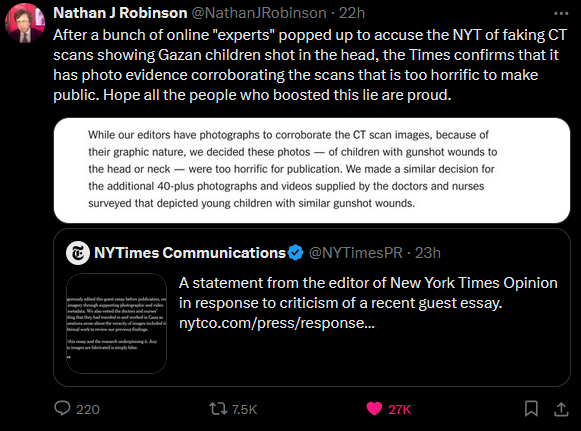
I think they don't want to publish it in part because it'll be hard for people to forget. Like the video of the man burning alive while on IV.
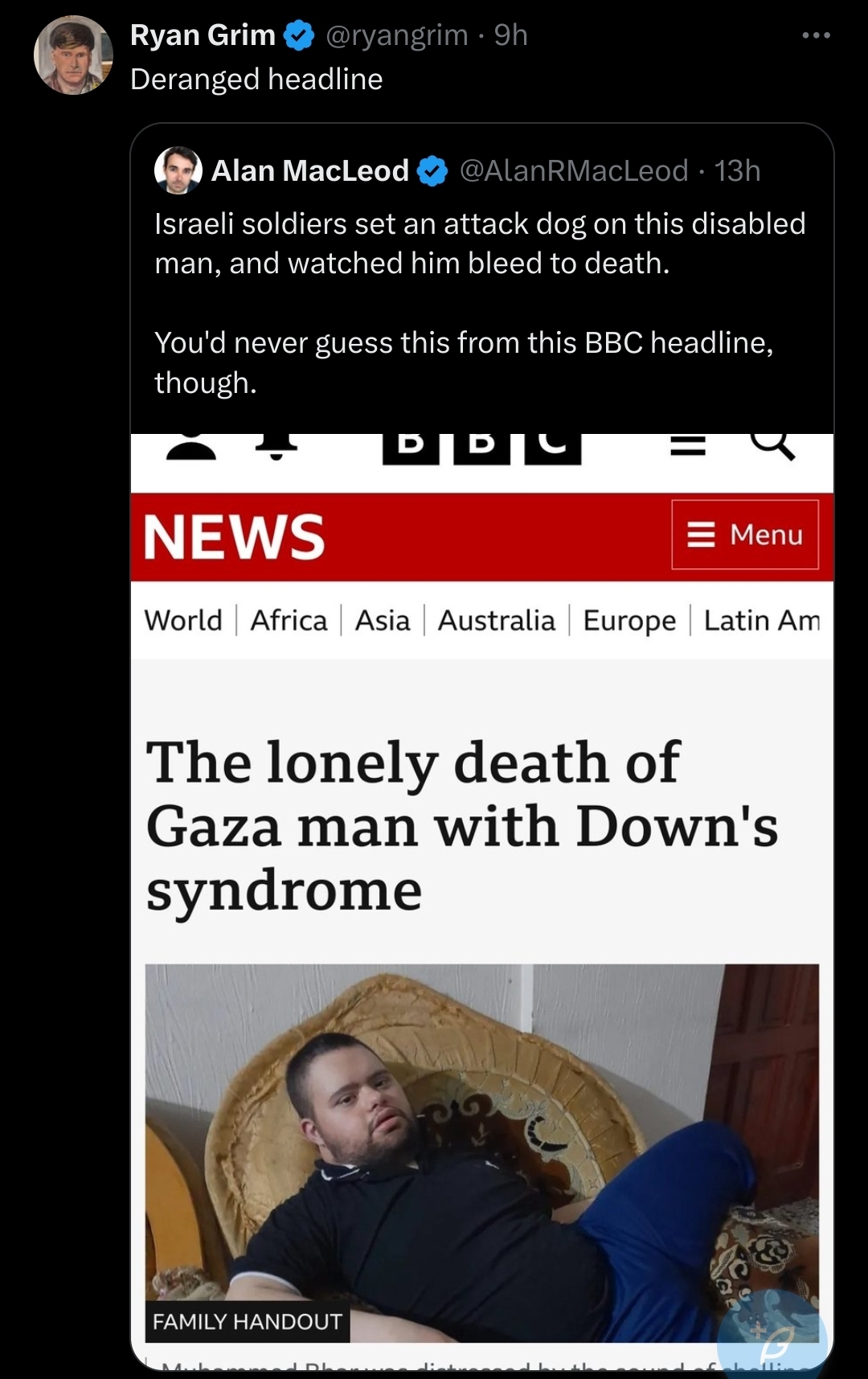
BBC is acting like he died of hunger naturally. Idk which is worse.
of course Modi is defending his fascist ally. 
goes to show how much India has fallen since 1991 
i don't think that's any better
IMF approves second review of agreement with Argentina and disburses another billion dollars
https://elpais.com/argentina/2026-04-15/el-fmi-aprueba-la-segunda-revision-del-acuerdo-con-argentina-y-desembolsa-otros-1000-millones-de-dolares.html
Basically another capital flight and treat subsidy. Much of which will go into paying existing debt ponzi.
Let's see how long this can continue before the Peso must collapse.
Both tax cuts for rich and interest payments are wasteful spending going into hoards or leaking into imports.
Really don't see a way out for Argentina unless they default on all their foreign currency debt and float the Peso, like actually float it, not pretend float since the latter forces Government to accommodate private demand for foreign currency. Then only can they raise socially useful spending.